What Are Some Health Benefits to Kids Playing in the Mud? Part III
Common Myths About Kids Playing in the Mud
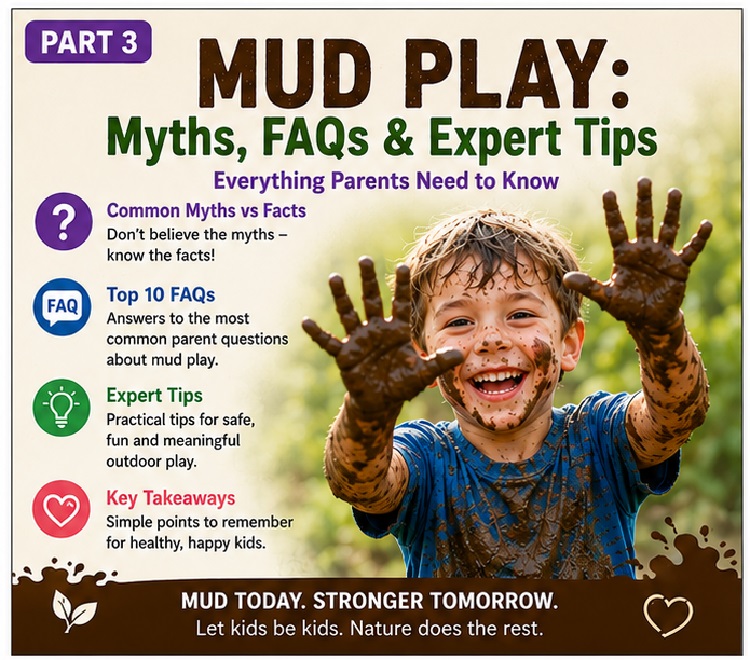
In this final part of this article, we explore What Are Some Health Benefits to Kids Playing in the Mud? Part III. We shall be looking at myths and facts. Take the time to explore and read, after you have gone through Part I and Part II.
| Myth | Fact |
|---|---|
| Dirt always makes children sick. | Most natural soil contains harmless microorganisms. Illness is more likely when soil is contaminated by sewage, chemicals, or animal waste. |
| A clean child is always a healthier child. | Good hygiene is important, but regular play in clean outdoor environments can be part of healthy childhood development. |
| Mud play has no educational value. | Mud play promotes creativity, sensory learning, problem-solving, and social development. |
| Children should stay indoors to avoid germs. | Outdoor play supports physical activity, mental well-being, and exposure to diverse natural environments. |
| Mud is only for toddlers. | Children of many ages can enjoy age-appropriate mud play under supervision. |
Frequently Asked Questions
1. Is mud play safe for toddlers?
Yes. Toddlers can safely enjoy mud play when supervised closely in clean, uncontaminated outdoor environments. Make sure they wash their hands after playing and avoid putting mud in their mouths.
2. Can playing in the mud strengthen my child’s immune system?
Research suggests that regular exposure to diverse natural environments may help support healthy immune development. However, mud should never replace good hygiene or recommended childhood vaccinations.
3. What if my child accidentally swallows a small amount of mud?
Small accidental ingestion is usually not harmful if the soil is clean. However, if the mud may have been contaminated with animal waste, chemicals, or sewage, or if your child develops vomiting, diarrhea, fever, or severe stomach pain, seek medical advice promptly.
4. How often should children play outdoors?
Health experts generally recommend that children spend time outdoors every day whenever possible. Regular outdoor play supports physical, emotional, and social development.
5. Does mud play improve mental health?
Outdoor play in nature has been linked with lower stress levels, improved mood, and better emotional well-being. Mud play contributes by encouraging creativity, physical activity, and imaginative exploration.
6. Can mud spread infections?
Yes, if the soil is contaminated. Parents should avoid areas affected by floodwater, sewage, industrial pollution, or animal waste.
7. What should parents do after mud play?
Wash hands thoroughly with soap and water, clean any toys used outdoors, and give children a bath or shower if they are heavily soiled.
8. What age is appropriate for mud play?
Children can begin supervised sensory mud play during the toddler years. Activities should always match the child’s developmental stage and ability.
9. Is mud play helpful for children with sensory challenges?
Many occupational therapists use sensory activities to support children’s development. While some children benefit from tactile play like mud, others may find it overwhelming. Parents should introduce new sensory experiences gradually and seek professional advice if needed.
10. Is backyard mud safe?
It can be, provided the soil has not been contaminated by chemicals, pesticides, sewage, or animal waste. Regularly inspect the play area for sharp objects and other hazards.
Expert Tips for Parents
Parents can make mud play both enjoyable and safe by following a few practical guidelines:
- Allow children to explore freely without worrying about getting messy.
- Create a simple mud kitchen using old pots, pans, spoons, and buckets.
- Encourage imaginative games instead of directing every activity.
- Teach children the importance of washing their hands before eating.
- Keep a change of clothes and a towel ready for easy cleanup.
- Choose outdoor play areas away from roads, construction sites, and polluted water.
- Join your child occasionally—shared outdoor play strengthens family bonds and creates lasting memories.
Key Takeaways
- Mud play is far more than a messy activity—it supports healthy childhood development.
- Safe exposure to natural environments may contribute to healthy immune system development.
- Mud play promotes creativity, imagination, and problem-solving skills.
- Outdoor activities improve physical fitness, coordination, and motor development.
- Playing in nature supports emotional well-being and may help reduce stress.
- Social interaction during mud play strengthens communication and teamwork.
- Always choose clean, uncontaminated areas and supervise young children.
- Good hygiene after outdoor play remains essential.
In Conclusion this is what it is
Children have an incredible ability to learn through exploration, and mud provides one of nature’s simplest yet most valuable learning environments. From strengthening motor skills and encouraging creativity to supporting emotional well-being and healthy physical activity, mud play offers benefits that extend far beyond simple entertainment.
While researchers continue to investigate how environmental microbes influence immune health, current evidence supports the idea that regular play in clean, natural settings can be an important part of a healthy childhood.
Parents don’t need to fear every muddy puddle. Instead, by choosing safe locations, supervising children appropriately, and practicing sensible hygiene afterward, they can confidently encourage outdoor adventures that foster curiosity, resilience, and lifelong learning.
Sometimes, the best childhood memories begin with muddy hands, dirty boots, and a big smile.
Medical Disclaimer
This article is intended for educational and informational purposes only. It should not be considered medical advice and is not a substitute for consultation with a qualified healthcare professional. If you have concerns about your child’s health, development, or safety, seek advice from your pediatrician or another licensed healthcare provider.
About the Author