Pain Killers and Kidney Disease: Risks, Safe Options, and Prevention Tips
Pain Killers and Kidney Disease. A silent threat that millions overlook
Pain is one of the most common reasons people seek medical treatment. Pain killers and kidney disease is not a new topic in the health sector. Whether it’s a headache, back pain, arthritis, toothache, menstrual cramps, or sports injury, many people turn to over-the-counter painkillers without thinking twice. While these medications can provide fast relief, frequent or improper use may come at a significant cost—especially to your kidneys.
Kidney disease is a growing global health concern affecting hundreds of millions of people. One of the lesser-known contributors to kidney injury is the excessive or inappropriate use of certain pain medications. For individuals with existing kidney disease, choosing the wrong painkiller can worsen kidney function and increase the risk of kidney failure.
Understanding the relationship between pain killers and kidney disease is essential for protecting your long-term health.
Why Are the Kidneys So Important?
The kidneys are two bean-shaped organs located below the rib cage. They perform several life-sustaining functions, including:
- Filtering waste products from the blood
- Removing excess fluid
- Regulating blood pressure
- Balancing electrolytes
- Producing hormones that help make red blood cells
- Supporting healthy bones through vitamin D activation
Because the kidneys receive approximately 20% of the body’s blood supply every minute, they are particularly vulnerable to medications that reduce blood flow or directly damage kidney tissues.

Which Pain Killers Can Harm the Kidneys?
Kidney Disease and Pain Killers
The greatest concern involves a group of medications known as Non-Steroidal Anti-Inflammatory Drugs (NSAIDs).
Common NSAIDs include:
- Ibuprofen
- Diclofenac
- Naproxen
- Ketoprofen
- Indomethacin
- Celecoxib
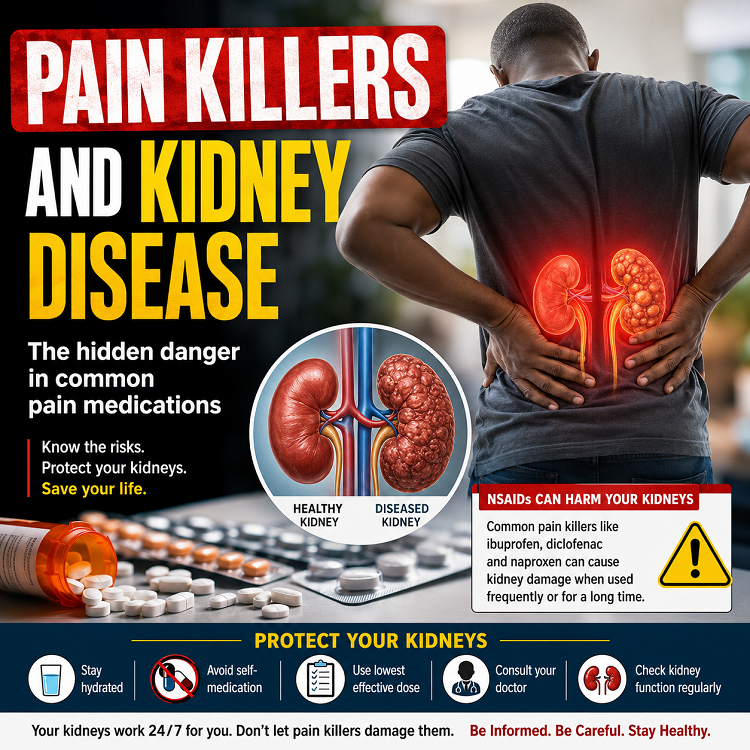
These medications reduce pain, inflammation, and fever by blocking enzymes known as cyclooxygenases (COX enzymes). Unfortunately, they also reduce the production of prostaglandins—chemicals that help maintain adequate blood flow to the kidneys.
When blood flow decreases, kidney tissues may receive less oxygen and nutrients, increasing the risk of acute kidney injury.
How Do Pain Killers Damage the Kidneys?
NSAIDs can affect kidney health in several ways.
1. Reduced Blood Flow
NSAIDs narrow blood vessels supplying the kidneys, reducing filtration and potentially causing sudden kidney injury.
2. Acute Kidney Injury (AKI)
Even healthy individuals may develop AKI after taking high doses of NSAIDs during dehydration, severe illness, or after surgery.
Symptoms may include:
- Reduced urine output
- Swollen feet or ankles
- Fatigue
- Nausea
- Shortness of breath
Sometimes, there are no symptoms until significant damage has occurred.
3. Chronic Kidney Disease (CKD)
Long-term, excessive use of painkillers may gradually damage kidney tissues, leading to permanent loss of kidney function.
Repeated injury over months or years can accelerate chronic kidney disease, especially in people with diabetes or hypertension.
4. Analgesic Nephropathy
This is a form of chronic kidney damage associated with prolonged use of pain-relieving medications, particularly combinations containing NSAIDs or older analgesic formulations.
Although less common today, analgesic nephropathy remains a recognized cause of chronic kidney disease.
Kidney Disease and Pain Killers | Who Is Most at Risk?
Not everyone develops kidney problems after taking painkillers. However, certain individuals face a much higher risk.
These include people with:
- Chronic kidney disease
- Diabetes
- High blood pressure
- Heart failure
- Liver disease
- Older age (over 65 years)
- Dehydration
- Severe infections
- Frequent NSAID use
- Use of multiple medications affecting kidney function
Patients taking ACE inhibitors, ARBs, or diuretics should be particularly cautious because combining these medicines with NSAIDs can significantly increase the risk of kidney injury.
Is Paracetamol Safer?
Paracetamol (also known as acetaminophen) is generally considered safer for the kidneys when taken at recommended doses.
However, this does not mean it is completely risk-free.
Excessive doses can cause severe liver damage, and people with kidney disease should still consult healthcare professionals before taking any medication regularly.
The safest pain medication depends on:
- Your kidney function
- Your age
- Other medical conditions
- Other medications you are taking
- Duration of treatment
Warning Signs of Kidney Damage
Kidney disease often develops silently.
Possible warning signs include:
- Swelling of the feet
- Puffy eyes
- Fatigue
- Poor appetite
- Persistent nausea
- Foamy urine
- Blood in urine
- Frequent nighttime urination
- High blood pressure
- Difficulty concentrating
Because symptoms may appear late, routine kidney function tests are essential for individuals at higher risk.
Tips to Protect Your Kidneys When Using Pain Medication
Protecting your kidneys does not necessarily mean avoiding pain treatment altogether.
Instead, consider these practical recommendations:
Use the Lowest Effective Dose
Only take pain medication when necessary and use the smallest effective dose for the shortest possible duration.
Avoid Self-Medicating for Long Periods
If pain lasts more than a few days, seek medical evaluation rather than repeatedly taking over-the-counter medicines.
Stay Well Hydrated
Dehydration increases the risk of kidney injury, especially when using NSAIDs.
Read Medication Labels Carefully
Many cold and flu medications also contain NSAIDs, leading to accidental overdosing.
Tell Your Doctor About Existing Kidney Disease
Healthcare providers can recommend safer alternatives if you have reduced kidney function.
Have Kidney Function Checked Regularly
Blood tests measuring serum creatinine and estimated glomerular filtration rate (eGFR), along with urine tests, help detect kidney problems early.
What Should Patients with Kidney Disease Do?
Individuals living with chronic kidney disease should never assume that over-the-counter medicines are automatically safe.
Before taking any pain medication:
- Consult your doctor or pharmacist.
- Avoid using NSAIDs unless specifically advised by your healthcare provider.
- Inform healthcare professionals about all prescription and non-prescription medicines you take.
- Attend regular kidney check-ups.
- Control diabetes and blood pressure to slow kidney disease progression.
Pain management may require a combination of medications, physical therapy, lifestyle changes, and treatment of the underlying cause rather than relying solely on painkillers.
When to Seek Immediate Medical Attention
Seek urgent medical care if you experience:
- Little or no urine production
- Severe swelling
- Difficulty breathing
- Severe weakness
- Persistent vomiting
- Confusion
- Chest pain after taking pain medication
These symptoms could indicate serious kidney injury requiring prompt evaluation.
The Bottom Line
Painkillers play an important role in improving quality of life, but they are not without risks. Among the most significant concerns is the potential for kidney damage, particularly from prolonged or excessive use of NSAIDs.
People with diabetes, hypertension, heart disease, or existing kidney disease should be especially cautious. Using pain medications responsibly, staying hydrated, following medical advice, and undergoing regular kidney function testing can help prevent avoidable kidney injury.
The best approach is not to fear pain medications but to use them wisely. A simple conversation with your healthcare provider before starting regular pain relief could protect your kidneys for years to come.
Early awareness, informed decisions, and routine kidney screening remain the strongest defenses against medication-related kidney disease.
Frequently Asked Questions (FAQs)
Can ibuprofen cause kidney failure?
Yes. Ibuprofen and other NSAIDs can cause acute kidney injury, particularly in people with dehydration, chronic kidney disease, heart failure, or those taking certain blood pressure medications.
Which painkiller is safest for kidney disease?
Paracetamol (acetaminophen) is generally considered safer than NSAIDs for many people with kidney disease when used at recommended doses. However, the safest option depends on your individual health status, so consult your healthcare provider.
Can kidney damage from painkillers be reversed?
Acute kidney injury caused by painkillers may improve if the medication is stopped promptly and appropriate treatment is started. Long-term or repeated damage can lead to permanent chronic kidney disease.
How often should people with kidney disease have kidney function tested?
The frequency depends on the stage of kidney disease and other health conditions. Your healthcare provider can recommend an appropriate monitoring schedule.
References
- KDIGO Clinical Practice Guideline for the Evaluation and Management of Chronic Kidney Disease. Kidney International Supplements. 2013;3(1):1–150.
- Luyckx VA, Tonelli M, Stanifer JW. The global burden of kidney disease and the sustainable development goals. Bulletin of the World Health Organization. 2018;96(6):414–422D.
- Whelton A. Nephrotoxicity of nonsteroidal anti-inflammatory drugs: Physiologic foundations and clinical implications. The American Journal of Medicine. 1999;106(5B):13S–24S.
- Gooch K, Culleton BF, Manns BJ, et al. NSAID use and progression of chronic kidney disease. American Journal of Medicine. 2007;120(3):280.e1–280.e7.
- Nderitu P, Doos L, Jones PW, et al. Non-steroidal anti-inflammatory drugs and chronic kidney disease progression: A systematic review. Family Practice. 2013;30(3):247–255.
- National Kidney Foundation. Pain medicines (analgesics) and kidney disease. Available educational guidance from the National Kidney Foundation.
- American Society of Nephrology. Clinical insights on drug-induced kidney injury and safe medication use in patients with kidney disease.
About the Author

Gatorwu
Administrator
Mr. Sylvanus Gatorwu is a public health educator with over 15 years of experience in community health promotion, kidney disease awareness, health education, and preventive healthcare. His work includes community outreach, public health campaigns, patient education, and collaboration with healthcare professionals to improve health literacy. He has worked closely with organizations like PEPFAR where he spearheaded the training of journalists in the Eastern Region of Ghana on how to write quality health articles. He also managed the Matthew Chapter 25 House (An HIV and AIDS Resource Centre), where he coordinated activities of people living with HIV.