What Happens If You Take Painkillers During Periods
What Happens If You Take Painkillers During Periods | Period pain is extremely common. For many people, menstrual cramps are a temporary inconvenience, but for others, the pain can be severe enough to interfere with work, school, sleep, and everyday activities. One of the most common ways to manage these symptoms is by taking painkillers during periods.
So, what happens if you take painkillers during periods? In most cases, appropriate painkillers can reduce menstrual cramps and make it easier to carry on with normal activities. However, different painkillers work differently, and some may have important side effects or risks.
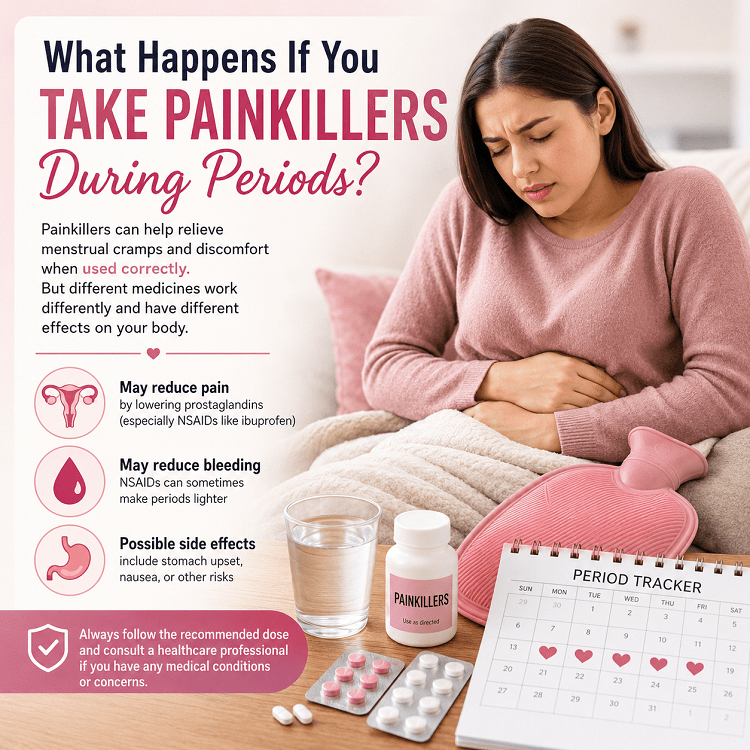
Nonsteroidal anti-inflammatory drugs (NSAIDs), such as ibuprofen and naproxen, are particularly useful for menstrual cramps because they reduce the production of prostaglandins—chemicals involved in uterine contractions and period pain. Paracetamol (acetaminophen) can also relieve pain but works differently.
This article explains what happens when you take common painkillers during menstruation, which medicines may help, possible side effects, and when period pain should be medically evaluated.
What Causes Period Pain?
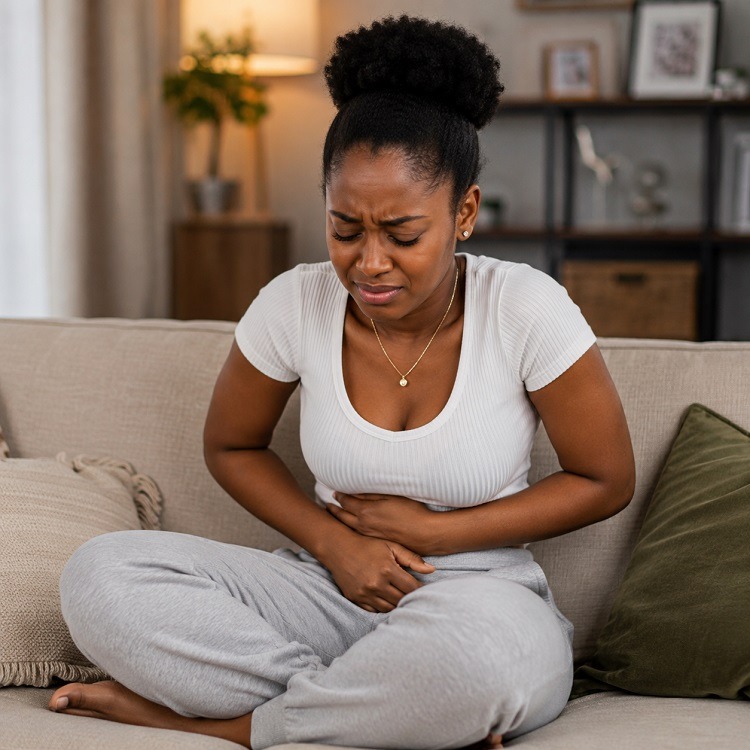
Menstrual pain, medically known as dysmenorrhea, usually occurs because the uterus contracts during menstruation.
The lining of the uterus produces substances called prostaglandins. These substances help the uterus contract so that menstrual blood and tissue can be expelled. However, higher levels of prostaglandins can contribute to stronger contractions and more painful cramps.
Period pain may cause:
- Lower abdominal cramps
- Lower back pain
- Pain spreading to the thighs
- Nausea
- Headaches
- Diarrhea
- Dizziness
For many people, the pain is strongest around the beginning of menstruation and improves after the first few days.
What Happens If You Take Painkillers During Periods
What Happens When You Take Painkillers During Periods?
The answer depends on the type of painkiller.
Some medicines mainly reduce pain signals, while others also reduce inflammation and prostaglandin production.
1. Ibuprofen and Other NSAIDs
Ibuprofen belongs to a group of medicines called nonsteroidal anti-inflammatory drugs (NSAIDs). Other NSAIDs include naproxen and aspirin.
NSAIDs reduce the production of prostaglandins. Because prostaglandins contribute to uterine contractions, reducing them can make menstrual cramps less severe.
This is why NSAIDs are commonly used for period pain.
Research reviewed by Cochrane found that NSAIDs are effective for relieving dysmenorrhea, although they can cause adverse effects and no single NSAID has been clearly established as universally superior to the others.
2. Paracetamol or Acetaminophen
Paracetamol, also known as acetaminophen, is another commonly used painkiller.
It can reduce pain but is not an NSAID and does not have the same anti-inflammatory action. It is generally less likely to cause stomach problems than NSAIDs when taken correctly.
However, taking too much paracetamol can seriously damage the liver. It is particularly important to check the ingredients of combination medicines because several products may contain acetaminophen/paracetamol.
3. Aspirin
Aspirin is also an NSAID and can relieve pain. However, aspirin affects platelets and can increase bleeding.
For someone who already experiences heavy menstrual bleeding, aspirin may therefore be an inappropriate choice unless a healthcare professional has specifically advised its use.
The NHS advises caution with aspirin and recommends medical advice for people with certain health conditions, including some stomach, heart, kidney, liver, and asthma problems.
What Happens If You Take Painkillers During Periods
Can Painkillers Reduce Period Pain?
Yes.
NSAIDs such as ibuprofen and naproxen can be particularly effective for menstrual cramps because they reduce prostaglandins.
They often work best when taken at the first sign of period pain or around the beginning of menstruation, rather than waiting until pain becomes severe. ACOG notes that pain relievers may also be started shortly before a predictable period and continued during the first few days, following appropriate directions.
Always follow the instructions on the medicine package or advice from your healthcare professional.
Can Painkillers Reduce Menstrual Bleeding?
Some NSAIDs can reduce menstrual blood loss as well as menstrual pain.
This happens because prostaglandins are involved in both uterine contractions and menstrual bleeding. Reducing prostaglandin production can therefore sometimes make menstrual bleeding lighter.
However, this does not mean that taking painkillers will stop your period.
If menstrual bleeding is unusually heavy, prolonged, or affecting your daily life, it is important to seek medical advice rather than simply taking painkillers every month.
Do Painkillers Stop Your Period?
Generally, ordinary painkillers do not stop menstruation.
Taking ibuprofen, naproxen, or paracetamol for period pain does not normally cause your menstrual cycle to stop.
NSAIDs may reduce menstrual blood loss in some people, but this is different from stopping menstruation.
Hormonal medicines, such as certain forms of hormonal contraception, can alter menstrual bleeding patterns and may sometimes make periods much lighter or stop them. This is different from the effect of ordinary painkillers.
Can Painkillers Delay Your Period?
Common painkillers are not normally used to deliberately delay menstruation.
Taking an occasional dose of ibuprofen or paracetamol should not normally cause your next period to be delayed.
If your periods suddenly become irregular, disappear, or change significantly, there may be another reason. Pregnancy, hormonal changes, stress, changes in weight, certain medications, and some medical conditions can affect menstruation.
When Is the Best Time to Take Painkillers for Period Cramps?
Timing can make a difference.
Because NSAIDs reduce prostaglandin production, they may work particularly well when taken early—at the first sign of menstrual pain or, for people with predictable cycles, shortly before the expected start of menstruation.
ACOG states that NSAIDs work best when started at the beginning of the period or when pain begins.
Do not exceed the recommended dose or take the medicine more frequently than instructed.
What Are the Side Effects of Painkillers During Periods?
What Happens If You Take Painkillers During Periods| Painkillers are medicines, and even commonly available medicines can cause side effects.
Possible side effects of NSAIDs
Ibuprofen, naproxen, and other NSAIDs may cause:
- Stomach irritation
- Indigestion
- Nausea
- Stomach pain
- Ulcers
- Gastrointestinal bleeding
- Kidney problems
- Allergic reactions
The risk can increase with higher doses, prolonged use, or certain underlying health conditions.
Possible side effects of paracetamol
Paracetamol is generally well tolerated when taken as directed. However, taking too much can cause severe liver damage and, in serious cases, liver failure or death.
Another important problem is accidental overdose. Some prescription and over-the-counter medicines contain acetaminophen/paracetamol, so taking several products simultaneously can result in an excessive total dose.
Who Should Be Careful When Taking Painkillers During Periods?
Some people should speak with a healthcare professional or pharmacist before using particular painkillers.
This includes people with:
- Kidney disease
- Liver disease
- Stomach ulcers
- Previous gastrointestinal bleeding
- Certain heart conditions
- High blood pressure
- Bleeding disorders
- Asthma triggered by aspirin or NSAIDs
- An aspirin allergy
- Pregnancy or possible pregnancy
- People taking blood-thinning medicines
NSAIDs can interact with certain medicines, including some anticoagulants.
If you have a chronic medical condition or take regular prescription medicines, ask a healthcare professional which painkiller is appropriate for you.
Can You Take Painkillers Every Month for Period Pain?
Some people use painkillers during each menstrual cycle to manage predictable cramps. However, regularly needing painkillers should not mean that severe menstrual pain is simply ignored.
If your period pain is severe, worsening, or repeatedly prevents you from working, studying, sleeping, exercising, or performing normal activities, speak with a healthcare professional.
Severe menstrual pain can sometimes be associated with conditions such as:
- Endometriosis
- Adenomyosis
- Fibroids
- Ovarian cysts
- Other pelvic conditions
ACOG notes that period pain caused by an underlying condition may become worse over time.
What Happens If You Take Painkillers During Periods
Common Mistakes to Avoid When Taking Painkillers
1. Taking more than recommended
A higher dose does not necessarily provide proportionally better pain relief and can increase the risk of serious side effects.
Always follow the product instructions or your healthcare professional’s advice.
2. Combining NSAIDs
Do not routinely combine different NSAIDs, such as ibuprofen and naproxen, unless a healthcare professional specifically tells you to do so.
Taking multiple medicines from the same class can increase the risk of adverse effects.
3. Taking several medicines containing paracetamol
Some cold, flu, headache, and prescription products contain paracetamol/acetaminophen.
Always check the active ingredients before taking another medicine.
4. Ignoring heavy bleeding
If your menstrual bleeding is unusually heavy, do not simply continue taking painkillers without finding out why.
5. Ignoring severe pain
Pain that is severe, worsening, or interfering significantly with normal activities deserves medical evaluation.
Can Heat Help Period Pain?
Yes.
You do not always need medication to manage mild menstrual cramps.
Measures that may help include:
- Applying a heating pad or hot-water bottle to the lower abdomen
- Taking a warm bath or shower
- Gentle exercise such as walking, cycling, swimming, or yoga
- Gentle abdominal or back massage
- Getting adequate rest and sleep
The NHS recommends heat and gentle physical activity among measures that can help relieve period pain.
For moderate or severe symptoms, these approaches can be combined with appropriate medical treatment when suitable.
Myths and Facts About Painkillers During Periods
Myth 1: Painkillers stop your period.
Fact: Ordinary painkillers do not normally stop menstruation. Some NSAIDs may reduce menstrual blood loss, but this is not the same as stopping a period.
Myth 2: All painkillers increase menstrual bleeding.
Fact: Different painkillers have different effects. NSAIDs may actually reduce menstrual blood loss in some people, while aspirin can increase bleeding because of its effects on platelets.
Myth 3: You should wait until period pain becomes severe before taking medicine.
Fact: NSAIDs may work better when taken at the first sign of pain or near the beginning of a predictable period.
Myth 4: Painkillers are completely safe because they are sold without a prescription.
Fact: Over-the-counter medicines can still cause serious side effects if taken incorrectly or by people with certain medical conditions.
Myth 5: Severe period pain is always normal.
Fact: Although period pain is common, severe or worsening pain can sometimes indicate an underlying condition such as endometriosis, adenomyosis, or fibroids.
When Should You See a Doctor About Period Pain?
Speak with a healthcare professional if:
- Your period pain is severe.
- Pain is getting worse over time.
- Pain prevents you from attending work or school.
- Pain continues despite appropriate treatment.
- Your periods suddenly become much heavier.
- Your periods become significantly irregular.
- You experience pelvic pain outside your period.
- You develop new severe menstrual pain.
- You regularly need painkillers to function during your period.
Severe menstrual pain should not simply be accepted as something you have to live with. A healthcare professional can investigate possible underlying causes and recommend appropriate treatment.
Seek Urgent Medical Attention for Certain Symptoms
Seek urgent medical help if you experience severe or sudden pelvic pain, fainting, severe weakness, or signs of significant bleeding.
You should also seek urgent medical advice if you develop signs of serious medication complications, such as vomiting blood, black or bloody stools, severe allergic reactions, or suspected overdose.
If you think you have taken too much paracetamol/acetaminophen, seek medical help immediately—even if you feel well—because serious liver injury may not cause obvious symptoms at first.
Frequently Asked Questions
1. Is it safe to take painkillers during periods?
For many people, appropriate painkillers can safely relieve menstrual pain when taken according to the product instructions. However, certain medicines may not be suitable for people with particular health conditions or those taking certain medications.
2. Can ibuprofen reduce period pain?
Yes. Ibuprofen is an NSAID that reduces prostaglandin production and can be effective for menstrual cramps.
3. Does ibuprofen reduce menstrual bleeding?
NSAIDs such as ibuprofen can reduce menstrual blood loss in some people. However, they should not be used as a substitute for medical assessment of unusually heavy periods.
4. Can paracetamol be taken for period cramps?
Paracetamol can relieve pain associated with menstruation. It works differently from NSAIDs and does not have the same anti-inflammatory effects.
5. Can aspirin make period bleeding heavier?
Aspirin can increase bleeding because it affects platelet function. People with heavy periods should discuss whether aspirin is appropriate with a healthcare professional.
6. Do painkillers stop your period?
Ordinary painkillers do not normally stop menstruation. Some NSAIDs can reduce menstrual blood loss, but they do not usually stop the menstrual cycle.
7. Can taking painkillers affect your menstrual cycle?
Common painkillers generally do not significantly alter the menstrual cycle. However, NSAIDs can influence menstrual blood loss, and individual responses can vary.
8. When should I take painkillers for period pain?
NSAIDs may work best when started at the first sign of pain or around the beginning of menstruation for people with predictable cycles. Always follow the product instructions or professional advice.
9. Can I take painkillers every month for period pain?
Some people use appropriate pain relief during every menstrual cycle. However, if you regularly experience severe pain or need medication frequently, talk to a healthcare professional to determine whether an underlying problem is present.
10. What is the best painkiller for period cramps?
There is no single painkiller that is best for everyone. NSAIDs such as ibuprofen and naproxen are commonly effective for menstrual cramps, while paracetamol is another option for pain relief. The safest choice depends on your health, other medicines, allergies, and individual circumstances.
What Happens If You Take Painkillers During Periods
So, what happens if you take painkillers during periods?
For many people, taking an appropriate painkiller can significantly reduce menstrual cramps and make the period easier to manage. NSAIDs such as ibuprofen work by reducing prostaglandins, which are important contributors to menstrual cramping. Paracetamol can also relieve pain but works differently.
However, painkillers are not risk-free. NSAIDs can cause stomach, kidney, and bleeding-related problems in some people, while excessive paracetamol can cause severe liver damage. Aspirin may also increase bleeding and may not be appropriate for someone with heavy menstrual periods.
The key is to choose an appropriate medicine, use it according to the directions, avoid unnecessary combinations, and seek medical advice when pain or bleeding is severe or unusual.
Most importantly, severe period pain should not simply be masked with painkillers every month without investigating the cause. Persistent or worsening menstrual pain can sometimes be a sign of an underlying condition that deserves proper evaluation.
Medical Disclaimer
This article is provided for general educational and informational purposes only. It does not replace an examination, diagnosis, or individualized treatment advice from a qualified doctor, pharmacist, or other healthcare professional. Always read the label of any medicine you take and seek professional advice if you have an underlying medical condition, take other medicines, are pregnant or may be pregnant, or are uncertain whether a medicine is appropriate for you.
Other ARTICLES
- What Causes Severe Period Pain?
- 10 Natural Ways to Relieve Menstrual Cramps
- When Heavy Menstrual Bleeding Requires Medical Attention
Credible Medical References
- American College of Obstetricians and Gynecologists (ACOG) – Dysmenorrhea: Painful Periods.
ACOG: Dysmenorrhea – Painful Periods - NHS – Period Pain.
NHS: Period Pain - MedlinePlus – Over-the-Counter Pain Relievers.
MedlinePlus: Over-the-Counter Pain Relievers - U.S. Food and Drug Administration (FDA) – Acetaminophen.
FDA: Acetaminophen Safety Information - Cochrane – Nonsteroidal Anti-inflammatory Drugs for Dysmenorrhoea.
Cochrane: NSAIDs for Dysmenorrhoea - ACOG – Painful Periods.
ACOG: Painful Periods
About the Author