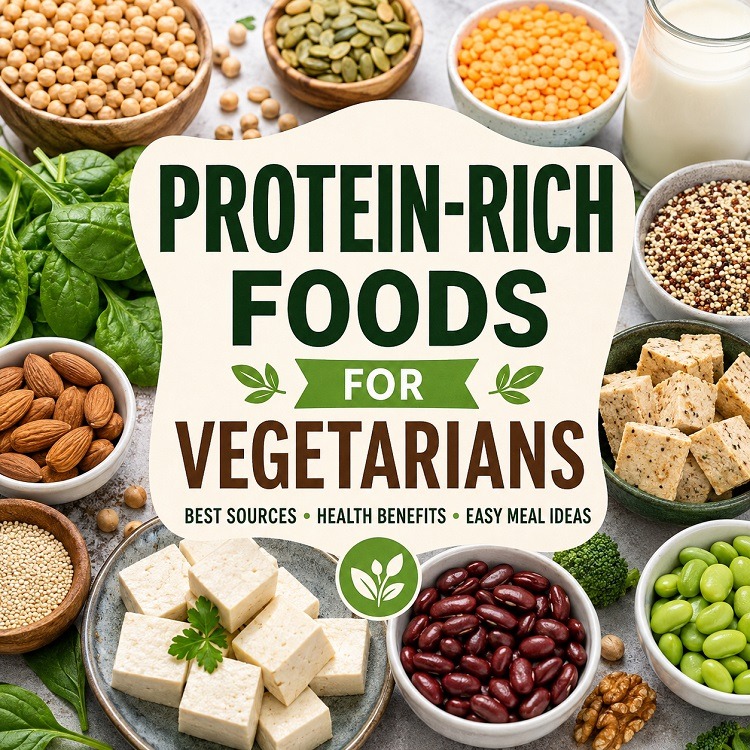
Protein-Rich Foods for Vegetarians: Best Sources, Benefits and Meal Ideas
Eating enough protein without meat is easier than many people think. From beans and lentils to tofu, eggs, dairy products, nuts and seeds, there are plenty of nutritious protein-rich foods for vegetarians.
Protein is important for building and repairing muscles, supporting the immune system, producing enzymes and hormones, and maintaining healthy tissues. The World Health Organization (WHO) notes that protein can come from both animal and plant sources and that healthy diets should provide adequate protein along with other essential nutrients.
The key is not simply to remove meat. A healthy vegetarian diet should replace meat with a variety of nutritious protein sources, whole grains, vegetables, fruits, nuts, seeds and legumes.
This guide explains the best protein-rich foods for vegetarians, how much protein common foods provide, how to reach 40 or even 100 grams of protein without meat, and common nutritional mistakes to avoid.
What Does Vegetarian Mean?
A vegetarian is generally a person who does not eat meat, poultry or fish.
However, vegetarian diets can differ.
Common types of vegetarian diets
- Lacto-ovo vegetarian: Eats dairy products and eggs but avoids meat, poultry and fish.
- Lacto-vegetarian: Eats dairy products but avoids eggs, meat, poultry and fish.
- Ovo-vegetarian: Eats eggs but avoids dairy, meat, poultry and fish.
- Vegan: Avoids all animal-derived foods, including meat, fish, eggs and dairy.
This distinction matters because the available protein sources differ. For example, a lacto-ovo vegetarian can obtain protein from eggs, milk, yogurt and cheese, while a vegan needs to depend entirely on plant foods and fortified products.
Mayo Clinic notes that vegetarian diets can provide adequate protein when they include a variety of foods such as legumes, lentils, soy products, nuts, seeds and whole grains.
What Are Protein-Rich Foods?
Protein-rich foods contain significant amounts of protein relative to their serving size.
Protein is made from amino acids. Your body uses these amino acids to build and repair tissues and to perform many other functions.
Some plant foods contain all nine essential amino acids in adequate proportions and are often described as complete proteins. Examples include soy, quinoa and certain seeds. Other plant proteins may be lower in one or more essential amino acids.
However, you do not need to combine specific plant proteins at every meal. Eating a varied diet throughout the day can provide the amino acids your body needs. Harvard’s Nutrition Source recommends including a variety of protein-containing plant foods rather than relying on just one source.
Top Protein-Rich Foods for Vegetarians
Here are some of the most useful options for people who want to increase protein without eating meat.
1. Soybeans and Soy Foods
Soy is one of the most versatile vegetarian protein sources.
Options include:
- Tofu
- Tempeh
- Soybeans
- Edamame
- Unsweetened soy milk
- Textured soy protein
Soy foods are particularly useful for vegetarians because they provide protein along with other nutrients.
Practical idea: Add tofu to stir-fries, use soybeans in salads or stews, or drink unsweetened fortified soy milk with breakfast.
2. Lentils
Lentils are inexpensive, easy to cook and widely available.
Cooked lentils provide roughly 9 grams of protein per 100 grams, although the exact amount varies with the variety and preparation method.
They can be added to:
- Soups
- Stews
- Curries
- Salads
- Rice dishes
- Vegetable sauces
Lentils are also a useful source of fibre and several minerals.
3. Beans
Beans are among the best cheap vegetarian protein sources.
Examples include:
- Black beans
- Kidney beans
- Pinto beans
- Navy beans
- Black-eyed beans
- White beans
Cooked beans generally provide around 7–9 grams of protein per 100 grams, depending on the type.
A simple meal of beans with whole-grain rice and vegetables can provide a satisfying combination of protein, carbohydrates, fibre and micronutrients.
4. Chickpeas
Chickpeas are another excellent choice.
Cooked chickpeas contain approximately 8–9 grams of protein per 100 grams.
You can use chickpeas to make:
- Hummus
- Chickpea curry
- Salads
- Stews
- Roasted chickpea snacks
They are particularly useful for people looking for vegetarian protein sources Indian, because chickpeas are commonly used in Indian cooking.
5. Tempeh
Tempeh is made from fermented soybeans.
It is usually more concentrated in protein than many other plant foods and can provide approximately 18–20 grams of protein per 100 grams, depending on the product.
Try adding tempeh to vegetable stir-fries, sandwiches or grain bowls.
6. Tofu
Tofu is another excellent soy-based food.
Depending on its firmness and preparation, tofu can provide approximately 8–18 grams of protein per 100 grams.
Firm tofu generally contains more protein than softer varieties.
Tofu can be:
- Fried
- Baked
- Grilled
- Added to soups
- Used in curries
- Crumbled as an egg substitute
7. Seitan
Seitan is made primarily from wheat gluten and is particularly high in protein.
Many varieties contain approximately 20–25 grams of protein per 100 grams.
However, seitan is not suitable for people with celiac disease or those who need to avoid gluten.
8. Peanuts and Peanut Butter
Peanuts are technically legumes rather than tree nuts, but they are excellent protein sources.
They contain approximately 25–26 grams of protein per 100 grams.
Peanut butter can be an easy way to increase protein intake.
For example, spread natural peanut butter on whole-grain bread or add a spoonful to oatmeal.
Remember that peanut butter is also high in calories, so portion size matters if your goal is weight loss.
9. Pumpkin Seeds
Pumpkin seeds are among the more protein-dense seeds, providing roughly 29–30 grams of protein per 100 grams.
They are also rich in healthy fats and minerals.
Add them to:
- Oatmeal
- Yogurt
- Salads
- Smoothies
- Homemade granola
10. Chia Seeds and Hemp Seeds
Seeds can make a useful contribution to vegetarian protein intake.
Hemp seeds are particularly protein-rich, while chia seeds also provide protein, fibre and omega-3 fatty acids.
However, because seeds are calorie-dense, you usually do not need large amounts.
11. Greek Yogurt
For lacto-ovo vegetarians, Greek yogurt can be a convenient protein source.
Depending on the brand, plain Greek yogurt can provide around 8–10 grams of protein per 100 grams.
Choose unsweetened varieties when possible and add fruit, seeds or oats for a balanced meal.
12. Eggs
Eggs are an excellent option for ovo-vegetarians and lacto-ovo vegetarians.
One large egg provides approximately 6 grams of protein.
Eggs can be boiled, scrambled, poached or added to vegetable dishes.
13. Cottage Cheese
Cottage cheese can provide approximately 10–12 grams of protein per 100 grams, depending on the product.
It can be combined with fruit for breakfast or used as a filling in sandwiches and wraps.
14. Quinoa
Quinoa is a whole grain-like seed that provides approximately 4 grams of protein per 100 grams when cooked.
Although it is not as protein-dense as tofu or legumes, it can contribute useful protein while also providing carbohydrates and fibre.
Harvard identifies quinoa among plant foods that can provide a complete protein profile.
Protein-Rich Foods Vegetarian Sources Chart
The following figures are approximate because protein content varies by variety, brand and cooking method.
| Food | Approx. protein per 100g |
|---|---|
| Pumpkin seeds | 29–30g |
| Peanuts | 25–26g |
| Seitan | 20–25g |
| Tempeh | 18–20g |
| Cooked soybeans | 16–17g |
| Firm tofu | 12–18g |
| Cottage cheese | 10–12g |
| Greek yogurt | 8–10g |
| Cooked lentils | 9g |
| Cooked chickpeas | 8–9g |
| Cooked beans | 7–9g |
| Eggs | About 13g |
| Cooked quinoa | About 4g |
| Broccoli | About 3g |
| Spinach | About 3g |
Important: These numbers are general estimates, not laboratory values for every product. Always check food labels when exact protein intake matters.
Which Vegetarian Food Is Highest in Protein?
If you are asking, “Which vegetarian food is highest in protein?”, the answer depends on whether you mean plant foods or all vegetarian foods.
Among concentrated plant-based options, seitan, certain seeds, peanuts, tempeh and some soy products are particularly high in protein.
However, the highest protein number is not necessarily the healthiest choice for every person. A good vegetarian diet should include different foods rather than relying heavily on one food.
What Are 5 High Protein Foods?
Five excellent choices are:
- Tempeh
- Tofu
- Lentils
- Beans
- Pumpkin seeds
For lacto-ovo vegetarians, eggs and Greek yogurt are also convenient high-protein choices.
What Are 10 Foods High in Protein?
Ten useful options include:
- Soybeans
- Tempeh
- Tofu
- Seitan
- Lentils
- Chickpeas
- Beans
- Peanuts
- Pumpkin seeds
- Greek yogurt
Combining several of these foods makes it easier to meet daily protein needs.
How to Get 100g Protein a Day Vegetarian
Getting 100 grams of protein a day as a vegetarian is possible, but your exact needs depend on factors such as body size, age, activity level and health status.
One example of a high-protein vegetarian day could look like this:
Breakfast
- Greek yogurt: 20g
- Oats and seeds: 10g
Lunch
- Lentils: 18g
- Whole-grain food and vegetables: 7g
Snack
- Peanut butter: 8g
Dinner
- Tofu or tempeh: 25g
- Beans: 10g
Approximate total: 98g
This is only an example, not a prescription. People who have kidney disease or another medical condition affecting protein intake should discuss their protein target with a qualified healthcare professional.
WHO notes that protein requirements vary and that people who are actively building or maintaining substantial muscle mass may need more protein than the general adult population.
How to Get 40 Grams of Protein Without Meat
You do not need meat to reach 40 grams of protein.
For example:
- 1 cup cooked lentils: approximately 18g
- 2 tablespoons peanut butter: approximately 7–8g
- 200g Greek yogurt: approximately 18–20g
That combination can provide around 43–46 grams of protein, depending on the products and serving sizes.
Alternatively, tofu, beans, soy milk, eggs or tempeh can be used.
Protein-Rich Food Veg for Weight Loss
If your goal is weight loss, focus on protein-rich foods that also provide fibre and nutrients.
Good choices include:
- Lentils
- Beans
- Chickpeas
- Tofu
- Tempeh
- Edamame
- Greek yogurt
- Vegetables
- Whole grains
- Moderate portions of nuts and seeds
Protein can help make meals more satisfying. However, simply eating large amounts of protein will not automatically cause weight loss.
For weight management, overall calorie intake, food quality, physical activity, sleep and other lifestyle factors matter.
WHO recommends diets built around a variety of vegetables, fruits, legumes, whole grains and nuts while limiting foods high in unhealthy fats, free sugars and salt.
Protein-Rich Vegetables
Vegetables generally contain less protein than legumes, soy foods, nuts and seeds. Still, some vegetables can contribute to your daily intake.
Examples include:
- Green peas
- Broccoli
- Spinach
- Asparagus
- Brussels sprouts
- Sweet corn
- Artichokes
The important point is that vegetables should complement, rather than replace, concentrated protein sources.
High-Protein Vegetarian Foods for Muscle Building
Vegetarians can build muscle successfully when they consume enough total protein, calories and other nutrients while following an appropriate resistance-training program.
Useful choices include:
- Tofu
- Tempeh
- Soybeans
- Seitan
- Lentils
- Beans
- Greek yogurt
- Eggs
- Cottage cheese
- Milk
- Peanuts
- Seeds
Try to include a protein source in each main meal.
For example:
Breakfast: Eggs + oats + milk
Lunch: Beans + brown rice + vegetables
Snack: Greek yogurt + seeds
Dinner: Tofu + vegetables + whole grains
The goal is consistency rather than eating an enormous amount of protein in one meal.
Benefits of Being a Vegetarian
A well-planned vegetarian diet can offer several nutritional benefits.
1. More Fibre
Legumes, vegetables, fruits and whole grains are rich in dietary fibre.
2. More Plant Foods
Vegetarian diets can encourage greater intake of vegetables, fruits, legumes, nuts and whole grains.
3. Potential Heart Health Benefits
Healthy plant-based diets are associated with favourable health outcomes, particularly when nutritious whole foods replace less healthy foods. WHO recommends diets rich in whole grains, vegetables, fruits, legumes and nuts.
4. Greater Food Variety
A vegetarian diet can encourage people to experiment with beans, lentils, seeds, whole grains and different vegetables.
However, being vegetarian does not automatically mean being healthy. A diet dominated by sugary drinks, refined carbohydrates and highly processed vegetarian foods can still be nutritionally poor. WHO specifically notes that not all plant-based diets are healthy and that highly processed plant-based foods may contain excessive salt, sugar or unhealthy fats.
Who Qualifies as a Vegetarian?
A person generally qualifies as vegetarian if they avoid meat, poultry and fish.
However, definitions can vary. Some vegetarians eat eggs and dairy, while others avoid all animal-derived foods.
Therefore, when planning meals, first identify which foods the person actually eats.
How a Vegetarian Should Choose Protein Sources
Do not ask only, “How much protein does this food contain?”
Also ask:
- Is it minimally processed?
- Does it provide fibre?
- Does it contain useful vitamins and minerals?
- How much salt and added sugar does it contain?
- Is it affordable?
- Can I eat it regularly?
- Does it fit my health needs?
A practical approach is to build meals around a protein source.
For example:
Protein + whole grain + vegetables + healthy fat
A Ghanaian-inspired meal could include beans, brown rice, vegetables and a small portion of avocado. Indian-style meals could combine lentils or chickpeas with vegetables and whole grains.
This approach makes healthy eating easier because protein becomes part of the meal rather than an afterthought.
Common Health Mistakes to Avoid as a Vegetarian
Mistake 1: Eating Too Many Refined Carbohydrates
Removing meat does not mean replacing it with large amounts of white bread, pastries, sugary cereals and refined starches.
Mistake 2: Assuming Every Plant-Based Food Is Healthy
Some vegetarian products are highly processed and may be high in sodium, sugar or saturated fat.
Mistake 3: Ignoring Vitamin B12
Vitamin B12 deserves special attention, particularly for vegans. Mayo Clinic notes that vitamin B12 occurs naturally mainly in animal products and recommends attention to fortified foods or supplements where appropriate.
Mistake 4: Forgetting Iron
Vegetarians can obtain iron from beans, lentils, fortified cereals, whole grains and dark leafy vegetables. Plant iron is less readily absorbed than iron from many animal foods, so combining iron-rich foods with vitamin-C-rich foods can help absorption.
Mistake 5: Eating Too Few Calories
Some people unintentionally eat too little when they remove meat. This can make it difficult to meet protein and energy needs.
Mistake 6: Depending Only on One Protein Food
Variety is better. Rotate beans, lentils, soy foods, seeds, nuts, eggs or dairy according to your dietary pattern.
Protein-Rich Foods for Vegetarians
Tips for Healthy Vegetarian Eating
Here are practical habits that can make a vegetarian diet easier:
- Include protein at every main meal.
- Choose beans, lentils and peas regularly.
- Eat a variety of vegetables and fruits.
- Include whole grains such as oats, brown rice, millet and whole wheat.
- Add nuts and seeds in sensible portions.
- Choose minimally processed foods most of the time.
- If you eat dairy, choose nutritious options such as plain yogurt.
- If you eat eggs, use them as one of several protein sources.
- If vegan, pay particular attention to vitamin B12 and other nutrients.
- Combine iron-rich foods with vitamin-C-rich foods.
- Drink enough water.
- Read food labels on meat substitutes and plant-based packaged foods.
WHO emphasizes adequacy, balance, moderation and diversity as core principles of a healthy diet.
Protein-Rich Foods for Vegetarians
Frequently Asked Questions
1. Can vegetarians get enough protein?
Yes. A well-planned vegetarian diet can provide enough protein through beans, lentils, soy foods, nuts, seeds, whole grains, eggs and dairy products, depending on the individual’s dietary pattern.
2. Which vegetarian food is highest in protein?
Foods such as seitan, pumpkin seeds, peanuts, tempeh and some soy products are among the most protein-dense vegetarian choices. However, protein content varies by product and preparation.
3. Can I build muscle on a vegetarian diet?
Yes. Muscle growth depends on appropriate resistance training, sufficient energy, adequate protein and recovery. Vegetarian athletes can use tofu, tempeh, soy foods, legumes, dairy, eggs, nuts and seeds to increase protein intake.
4. How can I get 100g of protein a day as a vegetarian?
Spread protein across breakfast, lunch, snacks and dinner. For example, use Greek yogurt or eggs at breakfast, lentils and beans at lunch, nuts or yogurt as a snack, and tofu or tempeh at dinner.
5. Are beans a good source of protein?
Yes. Beans are affordable sources of protein, fibre and other nutrients. They are particularly useful for people looking for cheap vegetarian protein sources.
6. Are vegetables enough to meet protein needs?
Usually, vegetables alone are not the most efficient way to meet high protein needs. Legumes, soy foods, dairy, eggs, nuts, seeds and whole grains generally provide more protein per serving.
7. Is a vegetarian diet automatically healthy?
No. A vegetarian diet can be very healthy, but it still needs to be balanced. Highly processed foods, sugary drinks and refined carbohydrates can be vegetarian but may not support good health.
Protein-Rich Foods for Vegetarians: Make Protein a Daily Habit
The best protein-rich foods for vegetarians are not necessarily expensive or difficult to find. Beans, lentils, chickpeas, soy foods, peanuts, seeds, eggs and dairy products can all play an important role in a balanced diet.
The most important lesson is variety. Instead of relying on one food, build meals around different protein sources and combine them with vegetables, fruits and whole grains.
A vegetarian diet can be nutritious, satisfying and practical when it is properly planned. If you are considering becoming vegetarian, start gradually. Try replacing one meat-based meal with beans, lentils, tofu or another nutritious vegetarian protein source. Then expand your choices as you become more comfortable.
Start with one healthy meal today. Explore new plant proteins, learn how to prepare them, and discover how enjoyable a balanced vegetarian lifestyle can be.
References
- World Health Organization (WHO). Healthy Diet.
WHO – Healthy Diet - World Health Organization (WHO). Healthy Diet: Key Facts and Recommendations.
WHO – Healthy Diet Information - Mayo Clinic. Vegetarian Diet: How to Get the Best Nutrition.
Mayo Clinic – Vegetarian Diet and Nutrition - Harvard T.H. Chan School of Public Health, The Nutrition Source. Protein.
Harvard Nutrition Source – Protein - World Health Organization & Food and Agriculture Organization of the United Nations. What Are Healthy Diets? Joint Statement.
WHO/FAO – What Are Healthy Diets? - World Health Organization. Healthy Diet: Questions and Answers.
WHO – Healthy Diet Questions and Answers
Editorial note: Protein values in the article are approximate and can vary according to food variety, brand, serving size and cooking method. People with kidney disease or other conditions requiring dietary protein restriction should seek individualized advice from a qualified healthcare professional.
About the Author