Introduction
What if one of West Africa’s traditional soup seasonings could offer more than just a rich, savory taste?
African locust bean, commonly called dawadawa in Ghana, is a traditional food made from the fermented seeds of the African locust bean tree (Parkia biglobosa). It has been used for generations as a natural seasoning in soups, stews and other local dishes.
Beyond its strong aroma and distinctive taste, dawadawa contains protein, fat, dietary fibre and minerals. Research on fermented African locust bean from Ghana has found substantial amounts of protein, fat and fibre, although the exact nutritional content can vary depending on the location, processing method and fermentation process.
So, is dawadawa good for the body? Yes, it can be a nutritious addition to a balanced diet when properly processed and consumed in sensible amounts. However, it should not be treated as a cure for diseases such as hypertension, ulcers or diabetes.
In this article, we explore 10 health benefits of African locust bean (dawadawa), how to prepare it safely, possible side effects and practical ways to get more nutritional value from this traditional West African food.
What Is African Locust Bean (Dawadawa)?
African locust bean comes from the Parkia biglobosa tree, a leguminous tree native to West Africa. The tree produces long pods containing sweet pulp and hard seeds.
The seeds are traditionally boiled, dehulled and fermented. The fermented product is known by different names across West Africa, including dawadawa, iru and soumbala.
Traditional fermentation is important because it changes the nutritional and chemical characteristics of the seeds. Research has found that processing can reduce some antinutritional compounds, while fermentation can improve protein digestibility and alter the availability of certain nutrients.
A 2025 study examining dawadawa produced in Ghana found considerable variation in its nutritional composition. The fermented samples contained approximately 36–50% protein, 17–28% fat and 6–7% fibre in the study samples, demonstrating why the food can contribute useful nutrients to the diet.
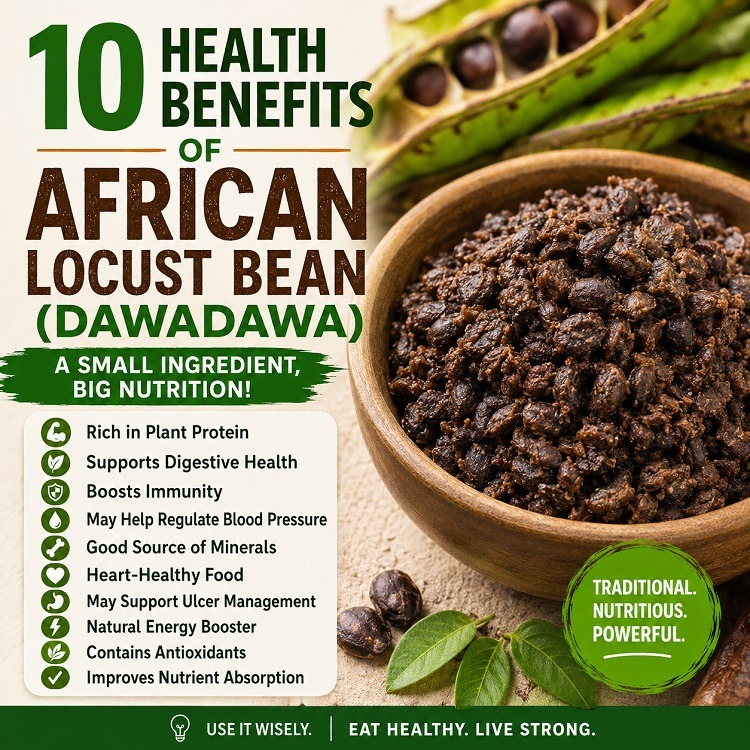
10 Health Benefits of African Locust Bean (Dawadawa)
1. Dawadawa provides plant-based protein
One of the most important health benefits of African locust bean (dawadawa) is its protein content.
Protein is needed to build and repair body tissues. It also contributes to muscles, enzymes, hormones and immune function.
This makes dawadawa particularly interesting for people who eat diets containing limited animal protein. Research describes African locust bean as a protein-rich food that can contribute protein and essential lipids to plant-based diets.
However, dawadawa should complement—not replace—the wider range of protein foods in a healthy diet.
Practical tip: Combine small amounts of dawadawa with beans, fish, eggs, groundnuts, vegetables or other nutritious foods.
2. It can contribute useful minerals
African locust bean seeds contain several minerals, although the amount can vary considerably.
A 2025 Ghanaian study found measurable amounts of iron, zinc and calcium in fermented dawadawa samples.
These minerals perform important functions:
- Iron helps transport oxygen in the blood.
- Zinc supports normal immune function and wound healing.
- Calcium is important for bones, teeth, muscles and nerve function.
However, the amount you actually obtain from a meal depends on the quantity of dawadawa eaten and how it was processed.
3. It may support digestive health
Dawadawa is a fermented food. Fermentation uses microorganisms to transform the food and can alter its nutrients and digestibility.
Studies of African locust bean fermentation have reported reductions in compounds such as phytates, tannins and other antinutritional factors. This may help make some nutrients more available.
More broadly, fermented foods may support digestive health, although not every fermented food provides the same probiotic effects. Healthline notes that fermented foods can contain beneficial microorganisms, but their microbial content varies depending on how the food is produced and processed.
Therefore, it is better to say that dawadawa may contribute to digestive health rather than claim that it treats digestive diseases.
4. It can add dietary fibre to the diet
Dietary fibre is important for normal bowel function and overall digestive health.
Research on fermented dawadawa from Ghana found fibre in the tested samples.
A diet containing enough fibre can help support regular bowel movements and contributes to a healthy eating pattern.
However, dawadawa is normally eaten as a condiment, meaning the amount consumed in one meal may be relatively small. For this reason, you should also obtain fibre from vegetables, fruits, beans, whole grains, nuts and seeds.
5. It contains fats that contribute energy
African locust bean seeds naturally contain fat. In the Ghanaian study, fermented samples contained approximately 17–28% fat, although values varied between locations.
Dietary fat provides energy and helps the body absorb fat-soluble vitamins.
The important point is portion size. Dawadawa can be part of a healthy diet, but eating very large quantities does not automatically provide greater health benefits.
A balanced diet should contain a variety of foods and appropriate amounts of different types of fat. This agrees with WHO guidance, which emphasizes adequacy, balance, moderation and diversity as the foundation of a healthy diet.
6. Fermentation may improve nutrient availability
Another important benefit is the effect of processing.
Raw African locust bean seeds contain compounds known as antinutritional factors. These are natural substances that can interfere with the digestion or absorption of certain nutrients.
Research comparing raw, boiled and fermented Parkia biglobosa found that processing reduced several antinutritional factors. Fermentation reduced these compounds in many of the samples studied.
Another study found that fermentation reduced phytates, tannins and saponins and improved some measures of nutrient digestibility.
This is one reason traditional processing matters.
7. It can make meals more nutritious without requiring large amounts
Dawadawa is mainly used as a seasoning. Its strong flavor means that a relatively small quantity can change the taste and aroma of a soup or stew.
This can be useful because healthy eating is not only about individual “superfoods.” It is about creating meals that contain a variety of nutritious ingredients.
For example, you can combine dawadawa with:
- leafy green vegetables
- tomatoes
- onions
- beans
- fish
- lean meat
- okra
- garden eggs
- whole grains
WHO recommends dietary diversity because consuming different foods increases the chance of meeting vitamin and mineral needs.
8. It contains naturally occurring bioactive compounds
African locust bean contains various plant compounds, including phenolic compounds and flavonoids.
Laboratory research suggests that fermentation can alter the availability of these compounds and may increase antioxidant activity in certain preparations.
Antioxidants help protect cells from oxidative damage.
However, this is an area where careful wording is important. Laboratory antioxidant activity does not automatically mean that eating dawadawa prevents or cures a particular disease in humans.
More human clinical research is needed before making strong disease-prevention claims.
9. It can support a more plant-based diet
Plant-based diets can provide many health benefits when they are well planned.
African locust bean provides plant protein, fats and minerals and can add savory flavor to plant-based meals. Researchers have described it as a valuable protein-rich ingredient in plant-based diets, particularly where access to animal protein may be limited.
For example, a vegetarian meal containing beans, vegetables, whole grains and a small amount of dawadawa can provide a broad mixture of nutrients.
The key is variety rather than dependence on one food.
10. It is a traditional, locally available food with nutritional value
Finally, dawadawa has an important place in West African food culture.
The African locust bean tree is valued for its edible products and has long contributed to food security and household livelihoods in West Africa.
Using nutritious traditional foods can also help people build healthier diets around foods that are locally familiar and accessible.
The Ghana Health Service emphasizes health promotion, healthy lifestyles and good nutrition as important components of public health.
Is Dawadawa Good for Blood Pressure?
Dawadawa may be included in a heart-healthy diet, but it should not be considered a treatment for high blood pressure.
Some minerals found in African locust bean may contribute to normal body functions, but there is not enough human clinical evidence to say that eating dawadawa itself lowers blood pressure.
There is another important issue: salt and other high-sodium ingredients added to the meal.
WHO recommends that adults consume less than 2,000 mg of sodium per day, equivalent to less than 5 grams of salt. Excess sodium intake is associated with raised blood pressure.
Therefore, if you have hypertension, focus on the entire meal rather than one ingredient.
Use dawadawa for flavor while limiting excessive salt, stock cubes and other high-sodium seasonings.
Is Dawadawa Good for Ulcer Patients?
This is a common question: Is dawadawa good for ulcer patients?
There is currently no strong clinical evidence that dawadawa treats or heals peptic ulcers.
People with ulcers may also respond differently to foods. If a particular dawadawa-containing meal causes burning, pain, bloating or discomfort, reduce or avoid it and discuss your symptoms with a healthcare professional.
Mayo Clinic advises people with peptic ulcers to work with healthcare professionals on treatment and lifestyle management rather than relying on alternative foods or remedies.
Most importantly, persistent ulcer symptoms should not simply be treated with food. Medical evaluation is important because peptic ulcers can have causes requiring specific treatment.
Can You Eat Dawadawa Raw?
Raw African locust bean seeds are not the usual form eaten as dawadawa.
The traditional process involves prolonged cooking, removal of the seed coat and fermentation. Research describes the seed as being processed through boiling, dehulling and fermentation before becoming the familiar condiment.
Therefore, if you have raw seeds, do not simply eat them straight from the pod or use them as if they were ready-to-eat dawadawa.
Traditional processing helps soften the seeds, improve their culinary qualities and reduce some antinutritional compounds.
How Best to Prepare Dawadawa Before Eating It
For consumers, the safest option is usually to purchase properly processed, clean and hygienically prepared dawadawa from a reliable source.
Traditional production generally involves several stages.
Step-by-Step Dawadawa Preparation Process
Step 1: Select good-quality seeds
Choose mature, clean African locust bean seeds.
Discard seeds that show:
- visible mould
- unusual discoloration
- insect infestation
- unpleasant contamination
- signs of spoilage
Step 2: Wash the seeds
Clean the seeds thoroughly to remove dirt and other unwanted material.
Use clean, safe water.
Step 3: Boil thoroughly
Traditional processing involves prolonged boiling to soften the hard seeds.
Research on traditional production describes an initial boiling period that can last 24 hours or longer, followed by dehulling and additional boiling.
Step 4: Remove the seed coats
After boiling, the outer coverings are removed.
This makes the inner seed suitable for fermentation.
Step 5: Boil again
The dehulled seeds may undergo another period of boiling before fermentation.
Step 6: Ferment under controlled hygienic conditions
The cooked seeds are allowed to ferment. Traditional fermentation commonly involves naturally occurring microorganisms, particularly Bacillus species.
Step 7: Dry or store appropriately
Depending on the traditional method, the fermented product may be shaped, dried or stored for later use.
Food safety is critical. Uncontrolled fermentation or contaminated water, utensils or surfaces can introduce harmful microorganisms or contaminants. This is why commercially prepared products from reputable producers may be preferable when you cannot guarantee hygienic home processing.
Common Mistakes to Avoid When Eating Dawadawa
Even nutritious foods can become less healthy when handled poorly.
Avoid these mistakes:
1. Eating improperly processed seeds
Do not assume that raw seeds are equivalent to fermented dawadawa.
2. Using mouldy or spoiled dawadawa
A strong traditional smell is normal, but mould, visible contamination or obvious spoilage is not.
When in doubt, throw it away.
3. Adding too much salt
Dawadawa already provides strong flavor. You may not need excessive salt or salty seasoning cubes.
This is particularly important for people concerned about blood pressure. WHO identifies excess sodium intake as an important contributor to raised blood pressure.
4. Believing it can replace medication
Dawadawa is food—not a replacement for prescribed treatment.
5. Eating very large amounts
More is not always better. Use it as a condiment within a varied diet.
6. Ignoring food hygiene
Poor hygiene during preparation, storage or serving can turn a nutritious food into a food-safety risk.
Tips to Increase the Health Value of Dawadawa
You can make your dawadawa-containing meals healthier by following these practical tips:
- Use moderate amounts of dawadawa for flavor.
- Combine it with plenty of vegetables.
- Add beans or other healthy protein sources.
- Choose fish or other nutritious protein foods when appropriate.
- Reduce excess salt and high-sodium seasonings.
- Buy dawadawa from hygienic and trustworthy producers.
- Store it properly to prevent contamination.
- Eat a variety of fruits, vegetables, whole grains, legumes, nuts and seeds.
- If you have kidney disease or another condition requiring mineral or dietary restrictions, ask your healthcare professional about your individual diet.
A healthy diet is not based on one special ingredient. WHO recommends a pattern built around adequacy, balance, moderation, diversity and food safety.
Are There Any Side Effects of Eating Locust Beans?
For most people, properly prepared dawadawa can be part of a normal diet. However, individual reactions can vary.
Possible concerns include:
- Gas or bloating, particularly if you are not accustomed to fermented foods.
- Food intolerance or allergy, although this is not common.
- Food poisoning if the product is contaminated or poorly fermented.
- Excess sodium if the overall meal contains large amounts of salt or salty seasonings.
- Digestive discomfort if you personally do not tolerate the food.
Fermented foods can sometimes cause temporary digestive symptoms such as gas, bloating or stomach upset.
People with weakened immune systems or significant medical conditions should be especially careful with traditionally fermented foods and should seek individualized dietary advice when necessary.
Frequently Asked Questions About Dawadawa
1. Is dawadawa good for the body?
Yes, properly prepared dawadawa can be part of a healthy diet. It provides protein, fat, fibre and minerals and can improve the flavor of nutritious meals. However, it is not a cure-all food.
2. Is dawadawa good for blood pressure?
Dawadawa can fit into a heart-healthy diet, but there is insufficient evidence to say that it directly lowers blood pressure. Pay particular attention to the amount of salt and other high-sodium seasonings used with it.
3. Is dawadawa good for ulcer patients?
There is no strong evidence that dawadawa treats ulcers. If it causes discomfort or worsens your symptoms, avoid it and speak with a healthcare professional. Medical treatment should not be replaced with dietary remedies.
4. Can you eat dawadawa raw?
The familiar dawadawa condiment is produced by processing and fermenting African locust bean seeds. Raw seeds are not the normal ready-to-eat form and should not simply be eaten without appropriate processing.
5. What are the benefits of locust beans?
The potential nutritional benefits include providing plant protein, fat, fibre and minerals, while fermentation can reduce some antinutritional compounds and improve aspects of nutrient digestibility.
6. Does dawadawa contain protein?
Yes. Studies have found substantial protein content in fermented African locust bean, although the exact amount varies between samples and processing methods.
7. Can people with diabetes eat dawadawa?
Dawadawa can be included in a balanced diet for many people with diabetes, but the whole meal matters. Portion size, carbohydrates, added fats and other ingredients should be considered. People taking diabetes medication should follow their healthcare professional’s dietary advice.
Final Summary: 10 Health Benefits of African Locust Bean (Dawadawa)
The 10 health benefits of African locust bean (dawadawa) largely come from its nutritional value and the changes that occur during traditional fermentation.
Dawadawa can provide:
- Plant-based protein
- Important minerals
- Dietary fibre
- Dietary fat and energy
- Potential digestive benefits from fermentation
- Improved nutrient availability after processing
- Naturally occurring bioactive compounds
- A useful ingredient for plant-based diets
- Flavor that can make nutritious meals more enjoyable
- A locally important traditional food with nutritional value
At the same time, it is important to avoid exaggerated health claims. Dawadawa is a nutritious traditional food, not a medicine.
The best approach is simple: choose properly processed dawadawa, maintain good food hygiene, use moderate amounts, limit excess salt and combine it with vegetables, legumes, whole grains and other nutritious foods.
Your health is built from the foods you eat consistently—not from one “miracle” ingredient. Start by making your everyday meals more diverse, balanced and nutritious, and let traditional foods such as dawadawa be part of that healthy pattern.
About the Author