Medical Herbalists Urge Stronger Evidence-Based Practice At 2026 Annual Conference In Kumasi
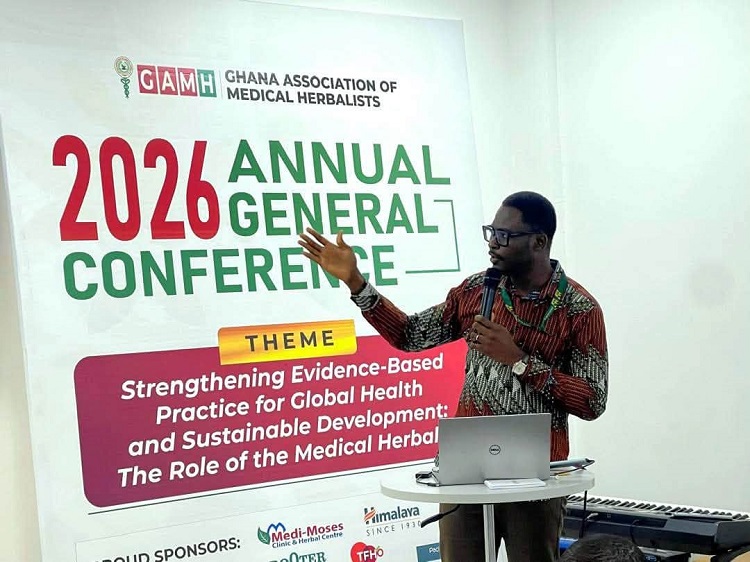
KUMASI — Medical Herbalists Urge Stronger Evidence-Based Practice At 2026 Annual Conference In Kumasi. The Ghana Association of Medical Herbalists (GAMH) has wrapped up its 2026 Annual General Meeting and Scientific Conference (AGSM) with a resounding call to integrate rigorous scientific validation into traditional medicine to boost global healthcare delivery.
The four-day national event, which took place from July 22 to July 25, 2026, at the Kwame Nkrumah University of Science and Technology (KNUST), brought together healthcare practitioners, researchers, regulators, and industry stakeholders from across the country.
This year’s conference held special historical significance, as it coincided with the 25th anniversary of the Department of Herbal Medicine at KNUST—a pioneering institution that has spent a quarter of a century training professional medical herbalists in the sub-region.
A Drive for Scientific Validation
The event was held under the theme: “Strengthening Evidence-based Practice for Global Health and Sustainable Development: The Role of the Medical Herbalist.”
Speakers throughout the summit emphasized that while traditional and herbal medicine remains a primary source of healthcare for millions of Ghanaians, its future on the global stage depends entirely on standardized research, documented clinical data, and verified safety profiles.
Addressing the gathering, leadership of the association highlighted the critical role medical herbalists play in bridging the gap between indigenous knowledge and modern scientific methods. Analysts at the event noted that accelerating evidence-based practice is essential to making herbal medicine a trusted pillar of Ghana’s universal health coverage goals.

Collaborative Support for Growth
The conference also served as a marketplace of ideas and innovation, heavily supported by key local industry giants. Prominent indigenous wellness brands, including the Medi-Moses Clinic & Herbal Centre, GOKALS Limited, and Rooter Natural Products, sponsored the event, showcasing the growing commercial viability and clinical maturity of Ghana’s herbal sector.
Speaking on the topic “Chronic Kidney Disease: Collaborative care for Ghana’s CKD crisis” Professor Elliot K. Tannor, a Professor of Medicine and a Consutant Nephrologist took his time to explain how collaborative efforts will help in various areas of healthcare.
Commenting on the programme on his facebook page after his presentation, he wrote ”
I had the privilege to be invited by the Ghana Association of Medical Herbalists to their 2026 AGSM to talk on “Chronic Kidney Disease: Collaborative care for Ghana’s CKD crisis” a couple of weeks ago.
Though we know some herbal medications can cause kidney disease, I also had the privilege to learn about some potent herbal medications used in treating some medical conditions.
I called for collaboration not only to focus on potency but also safety especially in patients with chronic kidney disease.
We resolved to focus on collaborative studies to understand and prove the safety of all herbal medications in all stages of kidney disease.
The more evidence we have the easier it becomes to embrace herbal medications.
Happy to learn!”
In recent times, herbal medications have become an issue of concern in Ghana especially when it comes to regulation. Not all people who practice herbal medication are captured by the Traditional Medicine Practice Council (TMPC).
This makes it very easy for quacks to infiltrate the healthcare system to prescribe anything in the name of herbal medication to the unsuspecting public.
Stakeholders at the end of the four-day deliberations called for increased public and private funding into local clinical trials. They also urged regulatory bodies to expedite the clinical registration of verified plant medicines to combat the influx of unapproved, sub-standard products on the market.
With its 2026 communique, GAMH has signaled a clear path forward: the future of Ghanaian healthcare is not just traditional or orthodox, but a unified system where scientifically vetted herbal remedies sit firmly at the table of modern global health.
About the Author