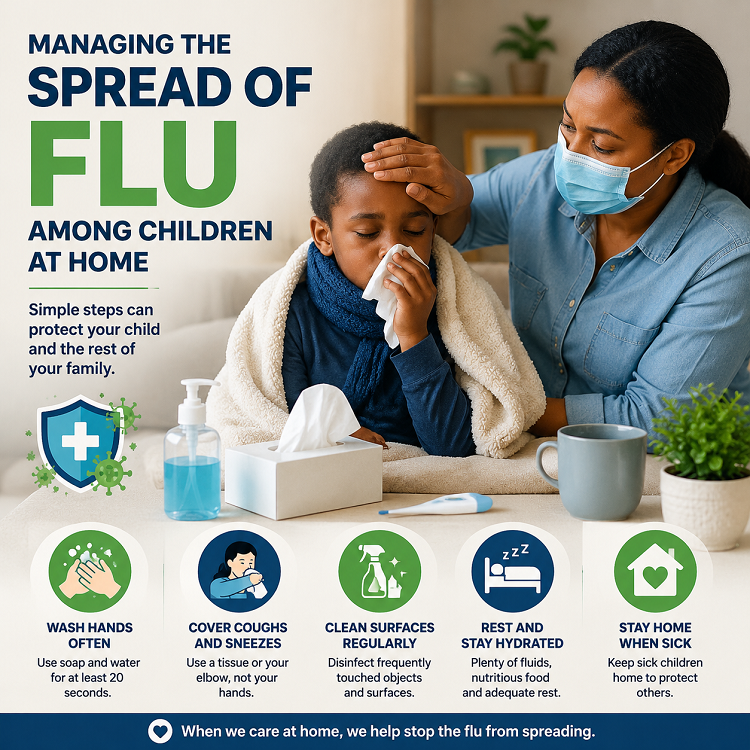
Managing the Spread of Flu Among Children at Home
Managing the Spread of Flu Among Children at Home can be a herculean task, especially for mothers. Every year, seasonal flu affects millions of children worldwide. Because the influenza virus spreads easily through coughing, sneezing, and contaminated surfaces, one sick child can quickly infect other family members. The good news is that simple hygiene practices and proper home care can significantly reduce the spread of flu while helping your child recover comfortably.
Recognize the Symptoms Early
Flu symptoms often appear suddenly and may include:
- Fever or chills
- Cough
- Sore throat
- Runny or blocked nose
- Body aches
- Headache
- Tiredness
- Occasionally vomiting or diarrhea, especially in young children
If your child develops these symptoms, it is best to keep them at home and avoid contact with other children until they have recovered.
Keep Your Sick Child Separate
If possible, let your child rest in a separate room away from siblings and elderly family members. Assign one healthy adult as the main caregiver to reduce the number of people exposed to the virus.
Avoid sharing:
- Cups and plates
- Towels
- Bedding
- Toys that are difficult to clean
Wash these items thoroughly after use.
Encourage Good Hand Hygiene
Frequent handwashing is one of the most effective ways to stop the spread of flu.
Teach children to:
- Wash their hands with soap and water for at least 20 seconds.
- Wash after coughing, sneezing, blowing their nose, and before eating.
- Use an alcohol-based hand sanitizer if soap and water are unavailable.
Parents and caregivers should also wash their hands regularly after caring for a sick child.
Cover Coughs and Sneezes
Encourage your child to cough or sneeze into a tissue or the inside of their elbow instead of their hands.
Dispose of used tissues immediately and wash hands afterward. This simple habit helps prevent virus-containing droplets from spreading around the home.
Clean Frequently Touched Surfaces
Influenza viruses can survive on hard surfaces for several hours.
Regularly disinfect items such as:
- Door handles
- Light switches
- Remote controls
- Mobile phones
- Tables and countertops
- Toys
Use household disinfectants according to the manufacturer’s instructions.
Support Your Child’s Recovery
While most children recover within a week, supportive care is important.
Help your child by:
- Encouraging plenty of fluids to prevent dehydration.
- Offering nutritious meals if they can eat.
- Ensuring they get adequate rest.
- Using fever-reducing medication such as paracetamol or ibuprofen when appropriate, following a healthcare professional’s advice and the correct dosage for the child’s age and weight.
Never give aspirin to children with flu because it has been linked to a rare but serious condition called Reye’s syndrome.
Know When to Seek Medical Care
Contact a healthcare provider immediately if your child has:
- Difficulty breathing
- Chest pain
- Persistent high fever
- Severe dehydration
- Confusion or extreme sleepiness
- Symptoms that improve but then worsen again
- A weakened immune system or chronic medical condition
Infants younger than six months with flu symptoms should also be assessed promptly by a healthcare professional.
Prevent Future Flu Infections
The best way to reduce the risk of flu is through prevention.
Parents can help by:
- Ensuring eligible family members receive the annual flu vaccine.
- Encouraging regular handwashing.
- Keeping sick children home from school or daycare until they have been fever-free for at least 24 hours without fever-reducing medicine.
- Maintaining a healthy diet, regular sleep, and physical activity to support the immune system.
In Summary
Managing the spread of flu among children at home requires a combination of early recognition, good hygiene, careful cleaning, and supportive care. These practical steps can protect other family members while helping your child recover safely. If your child’s symptoms become severe or you are concerned about their condition, seek medical advice without delay.
References
- Centers for Disease Control and Prevention (CDC). Preventing Seasonal Flu. https://www.cdc.gov/flu/
- World Health Organization (WHO). Influenza (Seasonal). https://www.who.int/news-room/fact-sheets/detail/influenza-(seasonal)
- American Academy of Pediatrics. Influenza (Flu) in Children. https://www.healthychildren.org
- National Health Service (NHS). Flu (Influenza). https://www.nhs.uk/conditions/flu/
- Mayo Clinic. Influenza (Flu): Symptoms and Causes. https://www.mayoclinic.org/diseases-conditions/flu/
About the Author