All About Moringa The Miracle Tree: Benefits, Nutrition, Uses & Health Facts
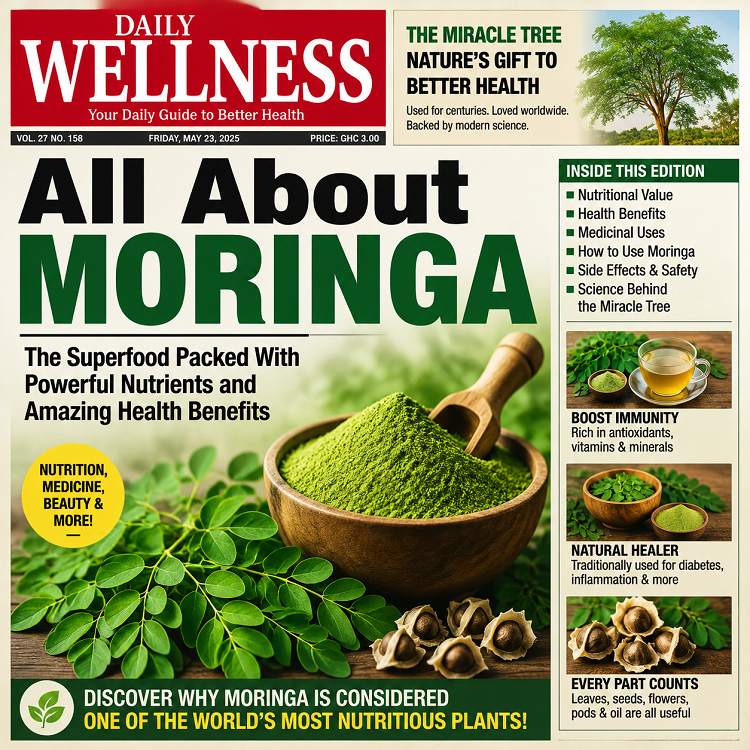
All About Moringa The Miracle Tree: Benefits, Nutrition, Uses, Side Effects, and Everything You Need to Know
All About Moringa The Miracle Tree | Moringa has earned worldwide recognition as one of nature’s most nutrient-rich plants. Often called the “Miracle Tree,” it has been used for centuries in traditional medicine, cooking, and nutrition. Today, moringa is widely available as fresh leaves, dried powder, capsules, tea, and oil, making it a popular dietary supplement among people seeking natural ways to support their overall health.
From rural communities where it helps combat malnutrition to modern wellness enthusiasts who add moringa powder to smoothies, this remarkable tree continues to gain attention for its impressive nutritional profile and potential health benefits. Researchers are also studying moringa to better understand its role in supporting heart health, blood sugar control, immune function, and inflammation.
While moringa contains many beneficial nutrients and plant compounds, it is important to recognize that it is not a cure for diseases. Many of its traditional uses are still being investigated, and more high-quality human studies are needed to confirm some of the health claims associated with this plant.
In this comprehensive guide, you’ll learn everything you need to know about moringa, including its nutritional value, scientifically supported health benefits, traditional uses, safety considerations, and practical ways to include it in a healthy lifestyle.
What Is Moringa?
Moringa refers to a group of fast-growing trees belonging to the Moringaceae family. The most widely cultivated and studied species is Moringa oleifera, which is native to the foothills of the Himalayas in northern India. Today, it is grown throughout Africa, Asia, Central America, South America, and other tropical and subtropical regions.
Nearly every part of the moringa tree is useful. The leaves are commonly eaten as vegetables or dried into powder, the seeds can be pressed to produce oil, the flowers are edible, and even the bark and roots have traditional medicinal uses.
Because of its remarkable nutritional value and ability to grow in harsh climates, moringa has become an important crop in many developing countries where food insecurity is a concern.
Common Names for Moringa
Depending on the country or region, moringa is known by several names, including:
- Drumstick tree
- Horseradish tree
- Ben oil tree
- Miracle tree
- Mother’s best friend
- Benzolive tree
Although these names differ, they usually refer to Moringa oleifera, the species most commonly used for food and supplements.
Where Does Moringa Grow?
Moringa thrives in warm climates with abundant sunlight. It grows well in:
- India
- Ghana
- Nigeria
- Kenya
- Uganda
- Ethiopia
- South Africa
- Philippines
- Thailand
- Indonesia
- Mexico
- Brazil
- Caribbean countries
One of moringa’s greatest advantages is its ability to tolerate drought, making it an excellent crop in regions with limited rainfall.
Different Species of Moringa
Scientists have identified more than a dozen species of moringa, but the most notable include:
1. Moringa oleifera
The most widely cultivated species for food, medicine, and commercial products.
2. Moringa stenopetala
Commonly grown in Ethiopia and Kenya, where its leaves are eaten as vegetables.
3. Moringa peregrina
Native to parts of the Middle East and northeastern Africa. It is valued mainly for its seeds and oil.
4. Moringa concanensis
Found primarily in India and closely related to Moringa oleifera.
Among these species, Moringa oleifera remains the best researched and most widely consumed.
All About Moringa The Miracle Tree
Why Is Moringa Called the Miracle Tree?
The nickname “Miracle Tree” comes from the fact that almost every part of the plant has practical uses.
Its leaves are exceptionally rich in vitamins, minerals, antioxidants, and protein. The seeds produce high-quality oil used in cosmetics and cooking. Crushed seeds have even been used traditionally to help clarify water by causing suspended particles to clump together.
In many communities, moringa serves as:
- A nutritious vegetable
- A dietary supplement
- Livestock feed
- A source of cooking oil
- Traditional herbal medicine
- A shade tree
- A natural soil improver
This versatility has made moringa an important resource for millions of people worldwide.
Nutritional Value of Moringa
One of the primary reasons moringa has become so popular is its exceptional nutritional profile. The leaves are particularly rich in vitamins, minerals, essential amino acids, fiber, and antioxidants.
Fresh leaves and dried powder contain slightly different nutrient concentrations because drying removes water, making nutrients more concentrated by weight.
Major Nutrients Found in Moringa
| Nutrient | Health Role |
|---|---|
| Vitamin A | Supports vision and immune function |
| Vitamin C | Helps immune health and collagen production |
| Vitamin E | Powerful antioxidant |
| Vitamin K | Essential for blood clotting and bone health |
| Calcium | Supports strong bones and teeth |
| Iron | Helps transport oxygen in the blood |
| Potassium | Supports heart and muscle function |
| Magnesium | Important for hundreds of enzyme reactions |
| Zinc | Supports immunity and wound healing |
| Protein | Builds and repairs body tissues |
| Fiber | Promotes healthy digestion |
| Amino Acids | Building blocks of proteins |
| Polyphenols | Plant compounds with antioxidant properties |
| Flavonoids | Help protect cells from oxidative stress |
Rich Source of Plant Protein
Unlike many leafy vegetables, moringa contains a relatively high amount of plant protein. It also provides several essential amino acids that the body cannot produce on its own, making it a valuable addition to diets that rely heavily on plant-based foods.
High in Antioxidants
Moringa leaves contain numerous antioxidant compounds, including:
- Quercetin
- Chlorogenic acid
- Beta-carotene
- Vitamin C
- Kaempferol
- Polyphenols
These antioxidants help protect cells from oxidative stress, which is associated with aging and many chronic diseases.
Health Benefits of Moringa
All About Moringa The Miracle Tree | Moringa’s impressive nutrient profile has made it the focus of many scientific studies. While research is ongoing, evidence suggests that moringa may support overall health in several ways when consumed as part of a balanced diet.
It is important to note that most of these benefits come from a combination of its nutrients and bioactive plant compounds, and moringa should not replace prescribed medical treatments.
1. Supports a Healthy Immune System
Moringa leaves are rich in vitamins A, C, and E, along with zinc and other antioxidants that help support normal immune function.
Vitamin C contributes to the production of white blood cells, while vitamin A helps maintain healthy skin and mucous membranes, which serve as the body’s first line of defense against harmful microorganisms.
2. Rich in Antioxidants
Free radicals are unstable molecules that can damage cells through a process known as oxidative stress. Over time, oxidative stress may contribute to aging and various chronic conditions.
Moringa contains a wide range of antioxidant compounds that help neutralize free radicals and support the body’s natural defense systems.
3. May Help Reduce Inflammation
Inflammation is a natural response to injury or infection. However, chronic inflammation has been linked to conditions such as heart disease, arthritis, and type 2 diabetes.
Some laboratory and animal studies suggest that compounds found in moringa may help reduce inflammatory processes. While these findings are promising, more human research is needed to determine their clinical significance.
4. Supports Heart Health
Maintaining healthy cholesterol levels, blood pressure, and blood vessel function is important for cardiovascular health.
Moringa provides potassium, antioxidants, and plant compounds that may help support heart health. Some early studies have suggested that moringa may contribute to healthier cholesterol levels, but further research in humans is required.
5. May Support Healthy Blood Sugar Levels
Several small studies have explored moringa’s potential role in supporting healthy blood sugar levels. Certain plant compounds may influence how the body processes glucose.
However, moringa should never replace diabetes medications. Individuals with diabetes should consult their healthcare provider before using moringa supplements, as combining them with medication may increase the risk of low blood sugar.
6. May Help Lower Cholesterol
Elevated LDL (“bad”) cholesterol is a known risk factor for cardiovascular disease.
Preliminary research indicates that moringa may help improve cholesterol levels, possibly due to its fiber, antioxidants, and plant sterols. Larger, long-term human studies are still needed to confirm these effects.
7. Supports Brain Function
Healthy brain function depends on an adequate intake of nutrients such as vitamin E, vitamin C, and antioxidants.
Moringa’s nutrient profile may help protect brain cells from oxidative stress. Researchers are investigating whether its antioxidant compounds could play a role in supporting cognitive health as people age.
8. Supports Bone Health
Moringa leaves contain calcium, phosphorus, magnesium, and vitamin K—nutrients that are essential for maintaining healthy bones.
Combined with regular exercise and adequate vitamin D intake, moringa can contribute to a diet that supports lifelong bone health.
9. Promotes Healthy Digestion
The fiber found in moringa leaves helps support normal digestion by promoting regular bowel movements and maintaining a healthy gut environment.
Fiber also contributes to feelings of fullness, which may help with healthy eating habits.
10. Supports Healthy Skin
Vitamin A, vitamin C, vitamin E, and antioxidants all play important roles in maintaining healthy skin.
These nutrients contribute to collagen production, help protect skin cells from environmental damage, and support normal skin repair processes.
11. May Support Healthy Hair
Hair health depends on adequate nutrition. Moringa contains protein, iron, zinc, and vitamins that support healthy hair growth and scalp health.
Moringa seed oil is also widely used in cosmetic products because it helps moisturize the scalp and hair without leaving a heavy residue.
12. May Support Weight Management
Although moringa is not a weight-loss product, it may support healthy weight management when combined with a balanced diet and regular physical activity.
Its fiber content can promote satiety, while its nutrient density makes it a valuable addition to nutritious meals.
13. Supports Liver Health
The liver helps process nutrients, filter toxins, and regulate metabolism.
Animal studies suggest that antioxidants in moringa may help protect liver cells from oxidative stress. Human evidence is still limited, so moringa should not be considered a treatment for liver disease.
14. Supports Eye Health
Moringa is rich in beta-carotene, which the body converts into vitamin A.
Vitamin A is essential for normal vision, particularly in low-light conditions, and helps maintain the health of the cornea.
15. May Help Prevent Nutrient Deficiencies
In many parts of the world, moringa is used to help improve dietary quality because it provides a wide range of essential nutrients.
When included as part of a balanced diet, moringa may help increase overall nutrient intake, particularly in populations at risk of vitamin and mineral deficiencies.
In Summary
Moringa is one of the world’s most nutrient-dense plants, offering a wide range of vitamins, minerals, antioxidants, and beneficial plant compounds. Its leaves, in particular, are rich in nutrients that support immune function, heart health, digestion, bone health, skin, and overall wellness. While early scientific research is promising, moringa is best viewed as a nutritious food rather than a cure-all, and it should complement—not replace—evidence-based medical care.
All About Moringa The Miracle Tree
In Part 2, We shall explore the different forms of moringa—including leaves, powder, tea, seeds, and oil—along with their traditional uses, medicinal applications, and what current scientific research says about their effectiveness.
References
- Leone, A., Spada, A., Battezzati, A., Schiraldi, A., Aristil, J., & Bertoli, S. (2015).
Cultivation, Genetic, Ethnopharmacology, Phytochemistry and Pharmacology of Moringa oleifera Leaves: An Overview. International Journal of Molecular Sciences, 16(6), 12791–12835. https://doi.org/10.3390/ijms160612791 - Fahey, J. W. (2005).
Moringa oleifera: A Review of the Medical Evidence for Its Nutritional, Therapeutic, and Prophylactic Properties. Part 1. Trees for Life Journal, 1(5), 1–15. https://www.tfljournal.org/article.php/20051201124931586 - National Center for Complementary and Integrative Health (NCCIH). (2024).
Herbs at a Glance: Moringa. U.S. Department of Health and Human Services. https://www.nccih.nih.gov/ - World Health Organization (WHO). (2023).
Healthy Diet. World Health Organization. https://www.who.int/news-room/fact-sheets/detail/healthy-diet - National Institutes of Health, Office of Dietary Supplements (ODS). (2024).
Dietary Supplements Fact Sheets. U.S. National Institutes of Health. https://ods.od.nih.gov/factsheets/list-all/
Author Profile: Sylvanus Gatorwu
About the Author

Gatorwu
Administrator
Mr. Sylvanus Gatorwu is a public health educator with over 15 years of experience in community health promotion, kidney disease awareness, health education, and preventive healthcare. His work includes community outreach, public health campaigns, patient education, and collaboration with healthcare professionals to improve health literacy. He has worked closely with organizations like PEPFAR where he spearheaded the training of journalists in the Eastern Region of Ghana on how to write quality health articles. He also managed the Matthew Chapter 25 House (An HIV and AIDS Resource Centre), where he coordinated activities of people living with HIV.