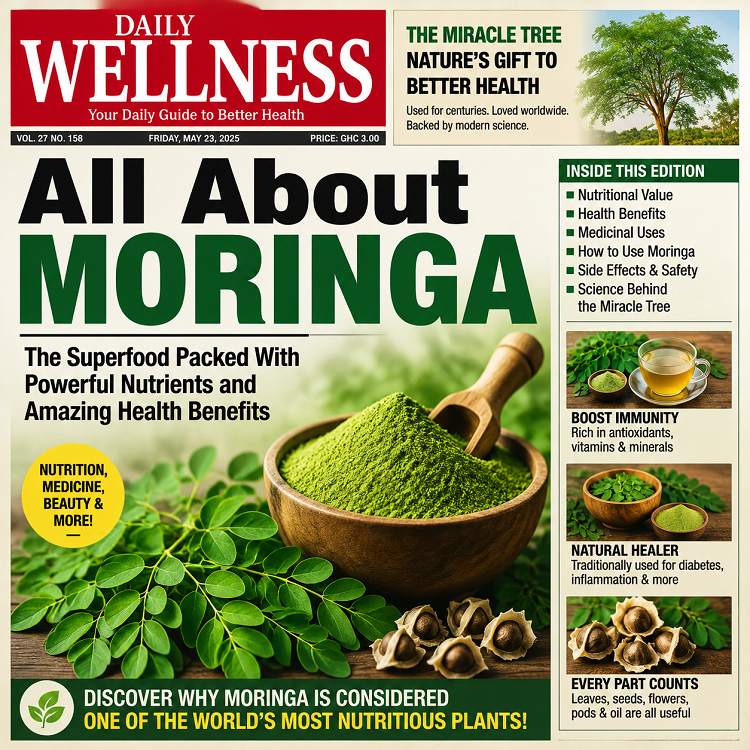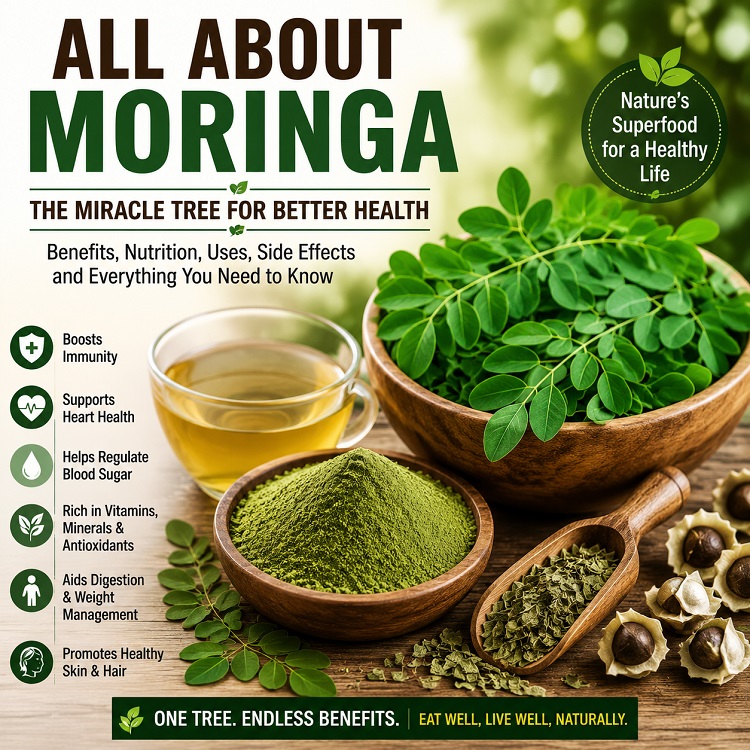
All About Moringa The Miracle Tree Part 3: Benefits, Nutrition, Uses, Side Effects, and Everything You Need to Know
All About Moringa The Miracle Tree Part 3 | In Part 1, we explored moringa’s origins, nutritional value, and potential health benefits. Part 2 examined its different forms, traditional uses, and current scientific research. In this final installment, we’ll discuss safe dosage, potential side effects, who should avoid moringa, how it compares with other superfoods, how to choose high-quality products, frequently asked questions, and practical tips for incorporating moringa into a healthy lifestyle.
Recommended Dosage of Moringa
There is no universally accepted daily dosage of moringa because the appropriate amount depends on factors such as age, overall health, the form of moringa used, and the specific product.
Most manufacturers provide serving recommendations based on their formulation. It is generally advisable to start with a small amount and increase gradually if tolerated.
All About Moringa The Miracle Tree Part 3
Typical Serving Guidelines
| Form | General Daily Amount* |
|---|---|
| Fresh leaves | ½–1 cup cooked or raw |
| Moringa powder | 1–2 teaspoons (about 2–5 grams) |
| Moringa tea | 1–2 cups |
| Capsules | Follow the manufacturer’s instructions |
| Seed oil | External use only unless labeled for culinary use |
*These are general dietary guidelines, not medical recommendations.
Tips for Safe Use
- Start with a small serving.
- Drink plenty of water.
- Follow the label directions.
- Avoid excessive intake.
- Consult a healthcare professional if you have a medical condition or take prescription medications.
Possible Side Effects of Moringa
For most healthy adults, consuming moringa leaves or moderate amounts of moringa powder as food is generally considered safe. However, like any supplement or herbal product, moringa may cause side effects in some individuals.
Digestive Upset
Large amounts may cause:
- Nausea
- Stomach discomfort
- Bloating
- Diarrhea
Starting with smaller servings may help reduce digestive symptoms.
Low Blood Sugar
Some studies suggest moringa may lower blood glucose levels. While this may be beneficial for some people, it could increase the risk of hypoglycemia in individuals taking diabetes medications.
Low Blood Pressure
Because moringa may have mild blood pressure-lowering effects, people taking antihypertensive medications should use caution and consult their healthcare provider.
Allergic Reactions
Although uncommon, allergic reactions may occur and can include:
- Skin rash
- Itching
- Swelling
- Difficulty breathing (requires immediate medical attention)
Medication Interactions
Moringa may interact with medications used for:
- Diabetes
- High blood pressure
- Thyroid disorders
- Blood thinning
Always inform your healthcare provider about any herbal supplements you use.
Who Should Avoid Moringa?
Although moringa is nutritious, it may not be suitable for everyone.
Pregnant Women
While moringa leaves are eaten as food in many cultures, some parts of the plant—particularly the root, bark, and root extracts—have traditionally been associated with uterine contractions. Pregnant women should avoid these parts and seek medical advice before using moringa supplements.
Breastfeeding Mothers
Moringa leaves have traditionally been used to support milk production, but evidence from clinical studies remains limited. Breastfeeding women should consult a healthcare professional before taking supplements.
People with Diabetes
Individuals taking insulin or oral diabetes medications should monitor blood sugar closely if using moringa and discuss its use with their healthcare provider.
People Taking Blood Pressure Medication
Because moringa may contribute to lower blood pressure, combining it with medication could increase the risk of hypotension.
Individuals with Chronic Health Conditions
People with kidney disease, liver disease, autoimmune disorders, or other chronic conditions should seek medical advice before using moringa supplements.
Moringa vs. Other Superfoods
All About Moringa The Miracle Tree Part 3
Moringa is often compared with other nutrient-rich foods. Each has unique strengths.
| Superfood | Main Benefits | Best For |
|---|---|---|
| Moringa | Vitamins, minerals, antioxidants, plant protein | Overall nutrition |
| Spirulina | High protein, iron, B vitamins | Plant-based protein |
| Matcha | Antioxidants, caffeine | Energy and focus |
| Kale | Vitamins A, C, K, fiber | Daily vegetables |
| Spinach | Iron, folate, magnesium | Balanced nutrition |
| Turmeric | Curcumin compounds | Culinary antioxidant support |
Rather than choosing one “best” superfood, eating a variety of nutrient-rich foods is the healthiest approach.
How to Buy High-Quality Moringa
Not all moringa products are produced to the same standard. Choosing a reputable product helps ensure quality and safety.
Look for:
- Organic certification (where available)
- Third-party quality testing
- Good Manufacturing Practices (GMP)
- Clearly labeled ingredients
- Country of origin
- Expiration date
- Airtight, light-resistant packaging
Avoid Products That:
- Make unrealistic medical claims.
- Do not list ingredients.
- Lack manufacturer information.
- Have unusual odors, mold, or discoloration.
Frequently Asked Questions
1. Is moringa safe to eat every day?
For most healthy adults, moderate amounts consumed as food are generally considered safe. Follow product directions and consult a healthcare professional if you have underlying health conditions.
2. Can moringa help lower blood sugar?
Some studies suggest it may support healthy blood sugar levels, but more research is needed. It should not replace prescribed diabetes treatment.
3. Does moringa help with weight loss?
Moringa is not a weight-loss medication. It may support healthy eating because it is nutrient-dense and contains fiber, but lasting weight management depends on diet, physical activity, sleep, and other lifestyle factors.
4. Can children consume moringa?
In some cultures, moringa leaves are included in children’s diets as a food. Parents should consult a pediatric healthcare professional before giving supplements.
5. Is moringa good for the kidneys?
Moringa is a nutritious food, but there is insufficient evidence to recommend it as a treatment for kidney disease. People with kidney disorders should seek medical advice before using supplements.
6. Does moringa improve fertility?
Traditional medicine has used moringa for reproductive health, but current scientific evidence is limited and inconclusive.
7. Can moringa improve skin health?
Its vitamins and antioxidants may support healthy skin as part of a balanced diet, but it is not a cure for skin conditions.
8. Is moringa tea caffeine-free?
Yes. Moringa tea naturally contains no caffeine.
9. How long does it take to notice benefits?
This varies depending on diet, health status, and the outcome being measured. There is no guaranteed timeline.
10. Can moringa replace multivitamins?
No. Although nutrient-rich, moringa should not replace prescribed supplements or a balanced diet unless advised by a healthcare professional.
Myths vs. Facts
| Myth | Fact |
|---|---|
| Moringa cures all diseases. | There is no scientific evidence that moringa cures diseases. |
| Natural products are always safe. | Natural products can have side effects and interact with medications. |
| More moringa means better health. | Excessive intake may increase the risk of side effects. |
| Moringa can replace medications. | It should never replace prescribed treatment without medical guidance. |
| Only supplements provide benefits. | Fresh leaves, cooked leaves, and powder all provide nutrients. |
| Moringa works instantly. | Benefits, if any, are influenced by overall diet, lifestyle, and individual health. |
Healthy Lifestyle Tips
To get the most from moringa, use it as one component of a healthy lifestyle.
Eat a Balanced Diet
Include:
- Fruits
- Vegetables
- Whole grains
- Lean proteins
- Healthy fats
Stay Physically Active
Aim for regular exercise appropriate for your age and fitness level.
Stay Hydrated
Drink enough water throughout the day.
Prioritize Sleep
Adults generally benefit from 7–9 hours of quality sleep each night.
Manage Stress
Healthy stress-management techniques include:
- Walking
- Meditation
- Deep breathing
- Spending time outdoors
- Social support
Attend Routine Medical Checkups
Regular health screenings help detect problems early and support long-term well-being.
All About Moringa The Miracle Tree Part 3
Moringa has earned its reputation as one of the world’s most nutrient-dense plants. Rich in vitamins, minerals, antioxidants, and beneficial plant compounds, it can be a valuable addition to a healthy, balanced diet. Whether enjoyed as fresh leaves, powder, tea, or incorporated into meals, moringa offers a practical way to increase the intake of important nutrients.
At the same time, it is important to approach moringa with realistic expectations. While laboratory studies, animal research, and some human studies suggest promising health benefits, the current scientific evidence does not support claims that moringa can cure diseases or replace conventional medical treatment. Many of its traditional uses require further high-quality clinical research.
The safest approach is to view moringa as a nutritious food rather than a miracle remedy. Choose high-quality products, use them in moderation, and consult a qualified healthcare professional before taking moringa supplements if you are pregnant, breastfeeding, have a chronic medical condition, or take prescription medications.
When combined with a balanced diet, regular physical activity, adequate sleep, stress management, and routine healthcare, moringa can play a supportive role in an overall healthy lifestyle.
Other Beneficial Articles
- Healthy Lifestyle Guide
- Benefits of Green Leafy Vegetables
- Foods Rich in Antioxidants
- Vitamins and Minerals Explained
- Herbal Supplements: Benefits and Risks
References
- National Center for Complementary and Integrative Health (NCCIH). (2024).
Herbs at a Glance. U.S. Department of Health and Human Services.
https://www.nccih.nih.gov/health/herbsataglance
Provides evidence-based information on the safe use of herbal supplements, potential side effects, medication interactions, and guidance for consumers. - Leone, A., Spada, A., Battezzati, A., Schiraldi, A., Aristil, J., & Bertoli, S. (2015).
Cultivation, Genetic, Ethnopharmacology, Phytochemistry and Pharmacology of Moringa oleifera Leaves: An Overview. International Journal of Molecular Sciences, 16(6), 12791–12835.
https://doi.org/10.3390/ijms160612791
A comprehensive review covering moringa’s nutritional composition, safety considerations, traditional uses, pharmacological properties, and current scientific evidence. - Vergara-Jimenez, M., Almatrafi, M. M., & Fernandez, M. L. (2017).
Bioactive Components in Moringa oleifera Leaves Protect Against Chronic Disease. Antioxidants, 6(4), 91.
https://doi.org/10.3390/antiox6040091
Reviews research on moringa’s antioxidant properties, health benefits, safety profile, and limitations of existing clinical evidence. - National Institutes of Health, Office of Dietary Supplements (ODS). (2024).
Dietary Supplements Fact Sheets. U.S. National Institutes of Health.
https://ods.od.nih.gov/factsheets/list-all/
Provides reliable guidance on dietary supplements, appropriate use, quality considerations, and safety for consumers. - World Health Organization (WHO). (2023).
Healthy Diet. World Health Organization.
https://www.who.int/news-room/fact-sheets/detail/healthy-diet
Supports the article’s recommendations that nutrient-rich foods such as moringa should be part of a balanced diet and healthy lifestyle rather than relied upon as a cure for
Author Profile: Sylvanus Gatorwu
About the Author