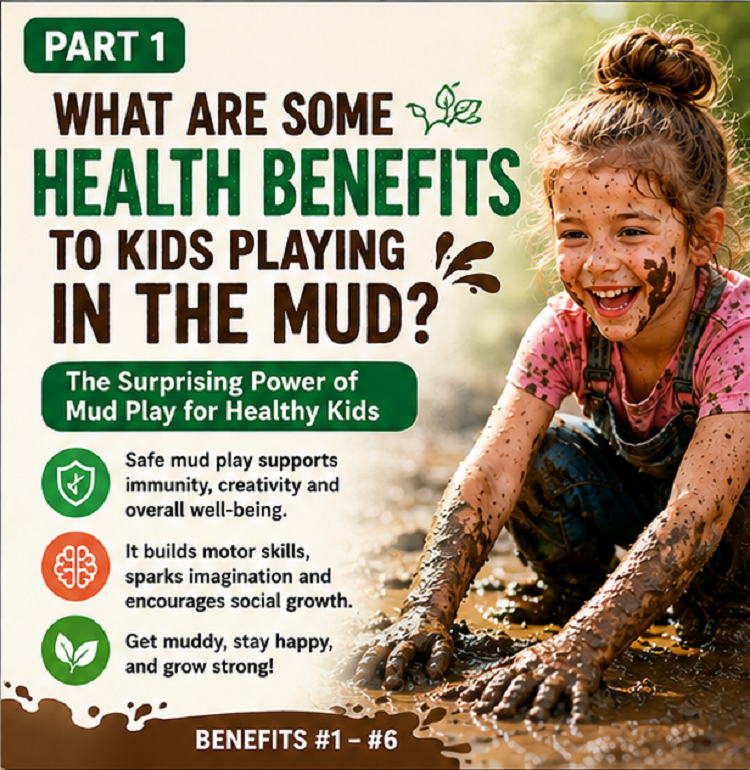
What Are Some Health Benefits to Kids Playing in the Mud? A Science-Backed Guide for Parents
For many parents, seeing a child covered from head to toe in mud can trigger one instinct: head straight for the bath. While keeping children clean is important, modern research suggests that getting a little dirty may actually be good for them.
Playing in the mud is more than just a messy pastime. It encourages children to explore, imagine, create, and connect with the natural world. Scientists have also found that regular exposure to natural outdoor environments may support healthy immune development, improve physical fitness, stimulate the senses, and contribute to emotional well-being.
That doesn’t mean every muddy puddle is safe. There is an important difference between healthy outdoor play in clean soil and exposure to contaminated environments. When children play in safe, supervised settings, mud can become an unexpected tool for learning and healthy development.
In this guide, we’ll explore the science-backed health benefits to kids playing in the mud, explain how to keep mud play safe, and answer common questions parents often ask.
What Is Mud Play?
Mud play refers to any activity where children interact with wet soil using their hands, feet, toys, or other objects. It is one of the simplest forms of outdoor play and requires very little equipment.
Children naturally enjoy mud because it allows them to experiment, build, dig, pour, splash, and create. Unlike structured toys that often have one intended purpose, mud offers endless possibilities for imagination.
A child might spend an afternoon making pretend meals in a mud kitchen, constructing miniature roads, digging canals for water, or creating castles. These open-ended activities encourage curiosity and independent thinking while making outdoor play exciting.
Mud play is also considered a type of sensory play because it engages multiple senses at once. Children can feel different textures, smell the earth after rainfall, observe changing colors, and hear the sounds of water splashing or mud squishing beneath their feet.
Is Playing in the Mud Safe?
The short answer is yes—provided children are playing in a safe environment.
Natural soil contains millions of microorganisms. While the word “bacteria” often sounds alarming, most microbes found in healthy soil are harmless, and many play essential roles in ecosystems. Exposure to a variety of environmental microbes during childhood is believed to help the immune system learn to distinguish between harmless substances and genuine threats.
However, parents should never assume that all mud is safe. Soil can become contaminated by animal waste, sewage, industrial chemicals, pesticides, heavy metals, or floodwater. These environments should always be avoided.
To keep mud play safe:
- Choose clean gardens, parks, or natural play areas.
- Avoid muddy water after floods.
- Keep children away from areas contaminated by animal droppings.
- Cover open cuts and scrapes before outdoor play.
- Encourage children not to deliberately eat mud.
- Wash hands thoroughly with soap and water before eating.
- Clean toys used in muddy environments.
- Supervise younger children throughout play.
With these simple precautions, mud play can be both enjoyable and safe.
12 Science-Backed Health Benefits to Kids Playing in the Mud
1. Supports a Stronger Immune System
One of the most widely discussed benefits of outdoor mud play is its potential role in supporting healthy immune development.
During childhood, the immune system is still learning how to respond to the world. Safe exposure to diverse microbes found in nature may help educate the immune system, allowing it to respond more appropriately to harmless substances such as pollen, dust, or certain foods.
Researchers have proposed what is commonly known as the “hygiene hypothesis.” More recent theories expand on this idea by suggesting that reduced exposure to beneficial environmental microbes may influence the development of allergies and some immune-related conditions. While scientists continue to study this relationship, there is growing evidence that regular interaction with natural environments can contribute to a healthier and more diverse microbiome.
This doesn’t mean children should be exposed to harmful germs or poor sanitation. Rather, healthy outdoor environments provide a natural balance that supports normal immune development.
2. Improves Sensory Development
Young children learn about the world through their senses.
Mud offers a rich sensory experience unlike almost any indoor activity. It can be soft, sticky, smooth, gritty, wet, cool, or thick depending on its composition.
As children squeeze, scoop, pour, and shape mud, their brains process information about texture, temperature, pressure, and movement. These sensory experiences strengthen the connections between the brain and the body.
Sensory play has also been linked to improved concentration, emotional regulation, and early learning. For some children, especially those who enjoy tactile exploration, mud play can become an enjoyable way to develop confidence while engaging multiple senses.
3. Encourages Creativity and Imagination
Unlike electronic games or structured toys, mud has no instructions.
A pile of mud can instantly become a bakery, construction site, volcano, farm, or restaurant. Children invent stories, assign roles, and solve problems as they play.
Creative play stimulates imagination while strengthening important cognitive skills such as planning, sequencing, decision-making, and flexible thinking.
Children who regularly engage in imaginative outdoor play often develop greater independence because they learn to entertain themselves without constant adult direction.
4. Promotes Physical Fitness
Running, climbing, digging, carrying buckets of water, kneeling, balancing on uneven ground, and building with mud all require movement.
These activities naturally increase physical activity without children even realizing they are exercising.
Mud play helps strengthen:
- Leg muscles
- Core stability
- Arm strength
- Balance
- Coordination
- Cardiovascular fitness
Unlike sedentary screen time, outdoor play encourages children to move continuously while developing lifelong healthy habits.
Regular physical activity during childhood also supports healthy weight management, stronger bones, and better overall health.
5. Develops Fine and Gross Motor Skills
Motor skills are essential for everyday activities such as writing, dressing, eating, and participating in sports.
Mud play strengthens both fine and gross motor skills.
Fine motor skills improve when children:
- Pinch mud into shapes
- Pick up small stones
- Build miniature structures
- Fill containers
- Use sticks as tools
Gross motor skills improve when they:
- Dig holes
- Jump over puddles
- Push wheelbarrows
- Lift buckets
- Climb hills
- Crawl across uneven surfaces
These movements build strength, coordination, and body awareness that support future learning and physical development.
6. Reduces Stress and Supports Emotional Well-Being
Children experience stress too. School demands, social challenges, family changes, and busy schedules can affect their emotional health.
Outdoor play provides a natural opportunity to relax.
Many children become deeply absorbed in digging, pouring water, building mud structures, or simply exploring nature. This focused play encourages mindfulness and helps shift attention away from everyday worries.
Natural environments have also been associated with lower stress levels and improved mood in both children and adults. Time spent outdoors encourages fresh air, sunlight, movement, and exploration—factors that collectively support emotional well-being.
Parents often notice that children return from outdoor play calmer, happier, and more relaxed than before they went outside.
READ PART II OF THIS ARTICLE
About the Author