Tapentadol (Red) Abuse Among Young People in Ghana: A Growing Public Health Crisis
Introduction
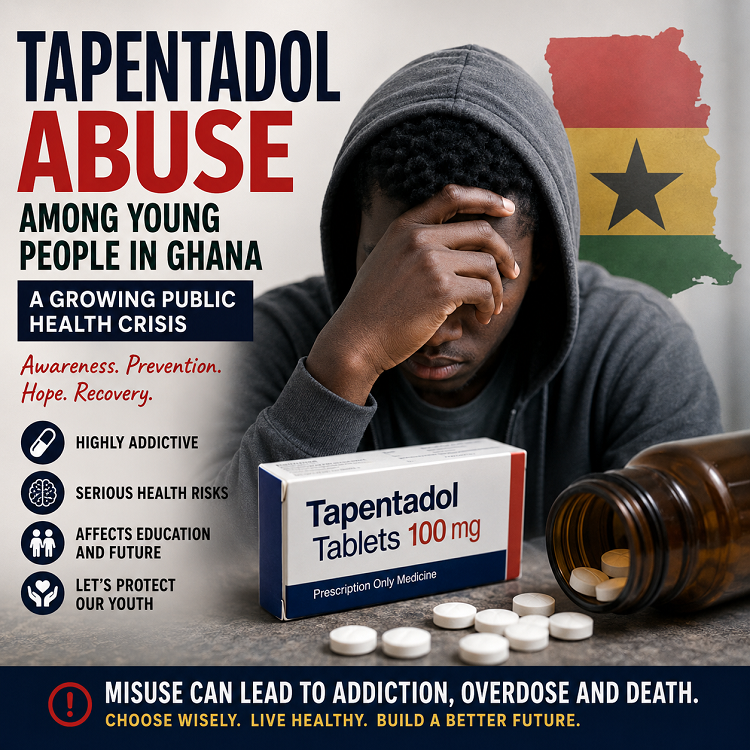
Tapentadol (Red) Abuse Among Young People in Ghana | Across Ghana, concerns about the misuse of prescription medicines are becoming increasingly common among healthcare professionals, educators, and parents. While illegal drugs such as cannabis and cocaine often receive widespread attention, the abuse of prescription painkillers is emerging as a quieter but equally dangerous public health challenge. Among these medications is tapentadol aka Red, a powerful opioid painkiller that has legitimate medical uses but also carries a significant risk of misuse and addiction.
Imagine a university student who begins taking tapentadol after sustaining a sports injury. Initially, the medication helps relieve severe pain and allows the student to continue attending lectures. However, after the prescription ends, the student discovers that the drug not only eases physical discomfort but also creates a feeling of relaxation and temporary emotional relief. Without proper medical supervision, occasional use gradually becomes daily dependence. Academic performance declines, relationships suffer, and the individual’s physical and mental health begin to deteriorate. Although this scenario is fictional, it reflects the pathway through which prescription opioid misuse can develop.
Young people are particularly vulnerable to substance misuse because adolescence and early adulthood are periods of exploration, social influence, and emotional development. Factors such as unemployment, academic pressure, peer influence, mental health challenges, and curiosity can increase the likelihood of experimenting with psychoactive substances. While comprehensive national data specifically on tapentadol misuse in Ghana remain limited, health experts have expressed concern about the broader misuse of prescription medicines and opioids in many parts of Africa, emphasizing the need for prevention before the problem becomes more widespread.
The consequences of tapentadol abuse extend beyond the individual. Families experience emotional and financial strain, educational institutions face declining student performance, healthcare facilities manage addiction-related complications, and communities bear the burden of increased substance misuse and associated social problems. If left unaddressed, opioid misuse can contribute to long-term addiction, overdose, and even death.
From the arial view of my office in Wa, Kambali street, I could spot young people addicted to the drug, sleeping while standing after taking several amongs of the illicit drug. This is a common sight among drug addicts especially in ghettos.
This article explores what tapentadol is, why some young people misuse it, the factors driving prescription opioid abuse in Ghana, and practical strategies that families, schools, healthcare providers, and policymakers can adopt to protect young people from this growing public health concern. The article will be divided into three parts.
What Is Tapentadol (Red)?
Tapentadol is a prescription opioid analgesic (pain-relieving medicine) used to treat moderate to severe pain when other pain medications are not effective or are unsuitable. It is available in immediate-release and extended-release formulations and should only be used under the supervision of a qualified healthcare professional.
Unlike common over-the-counter painkillers such as paracetamol or ibuprofen, tapentadol acts directly on the central nervous system. It works through two primary mechanisms:
- It stimulates mu-opioid receptors in the brain and spinal cord, reducing the perception of pain.
- It also inhibits the reuptake of norepinephrine, a neurotransmitter involved in pain modulation, thereby enhancing pain relief.
Because of this dual mechanism, tapentadol can provide effective pain control for conditions such as:
- Severe post-operative pain
- Major injuries
- Certain chronic pain conditions
- Cancer-related pain
- Neuropathic pain in selected patients
Healthcare professionals prescribe tapentadol only after carefully weighing its benefits against potential risks. Like other opioids, it can cause side effects such as:
- Drowsiness
- Dizziness
- Nausea
- Constipation
- Reduced alertness
When taken exactly as prescribed for a short period, tapentadol can be both safe and effective. However, problems arise when the medication is:
- Taken without a prescription
- Used in larger doses than prescribed
- Shared among friends
- Combined with alcohol or other drugs
- Used for its mood-altering effects rather than pain relief
Repeated misuse can cause the brain to adapt to the drug, leading to tolerance (needing higher doses for the same effect) and eventually physical dependence. In some individuals, this can progress to opioid use disorder, a chronic medical condition characterized by compulsive drug use despite harmful consequences.
Why Young People Are Abusing Tapentadol in Ghana
Tapentadol (Red) Abuse Among Young People in Ghana
Although reliable nationwide statistics specifically measuring tapentadol abuse among Ghanaian youth are currently limited, several well-recognized risk factors for prescription opioid misuse are relevant in Ghana. Understanding these factors is essential for developing effective prevention strategies.
1. Peer Pressure
Peer influence remains one of the strongest drivers of substance experimentation among adolescents and young adults. Young people often seek acceptance within social groups and may feel pressured to try substances that friends describe as exciting, relaxing, or performance-enhancing.
In some settings, prescription medicines may be mistakenly viewed as “safer” than illicit drugs because they are manufactured for medical use. This misconception can lower perceived risk and encourage experimentation.
2. Academic Stress
Students in senior high schools, colleges, and universities frequently face demanding academic schedules, examinations, and pressure to succeed. Some may misuse medications in an attempt to cope with stress, improve concentration, or stay awake for prolonged study sessions.
Others may turn to opioids to temporarily escape feelings of anxiety, disappointment, or emotional distress. While tapentadol is not intended for these purposes, its mood-altering effects can make it attractive to individuals seeking short-term relief.
3. Unemployment and Economic Challenges
Youth unemployment continues to pose significant social and economic challenges in Ghana. Financial hardship, uncertainty about the future, and limited employment opportunities can contribute to psychological stress and hopelessness.
For some individuals, substance misuse becomes a maladaptive coping mechanism to deal with these pressures. Although opioids cannot solve underlying economic problems, they may provide temporary emotional relief, increasing the risk of repeated use and dependence.
4. Mental Health Challenges
Depression, anxiety disorders, trauma, and other mental health conditions often coexist with substance misuse. Young people experiencing untreated emotional difficulties may self-medicate with prescription painkillers in an attempt to reduce emotional pain or improve mood.
Unfortunately, this often worsens mental health over time and increases the likelihood of addiction.
5. Curiosity and Risk-Taking Behaviour
Adolescence is naturally associated with experimentation and novelty-seeking. Some young people misuse prescription medicines simply to experience their psychoactive effects or because they have heard exaggerated stories from friends or social media.
Without understanding the risks of respiratory depression, overdose, and addiction, experimentation can quickly become habitual use.
6. Easy Access to Medicines
Improper storage of medications at home, sharing prescriptions among friends, and the illegal sale of prescription medicines can all increase access to opioids.
Strengthening responsible prescribing practices, safe medication storage, and enforcement against unauthorized drug sales can help reduce opportunities for misuse.
7. Social Media Influence
Social media platforms can expose young people to misleading information that glamorizes substance use or minimizes the risks associated with prescription medications.
Videos, online discussions, and peer-generated content may falsely portray opioid misuse as fashionable, harmless, or a way to cope with life’s challenges. Countering such misinformation through credible health education is increasingly important.
8. Lack of Awareness
Many young people do not realize that prescription opioids can be just as addictive as illicit drugs when misused. Because tapentadol is prescribed by healthcare professionals for legitimate medical reasons, some assume it is safe to use without supervision.
Increasing public awareness about the dangers of prescription opioid misuse is therefore essential.
9. Self-Medication
Some individuals continue taking pain medications after their original medical condition has improved or obtain them without proper medical advice to treat new episodes of pain.
Self-medication can lead to inappropriate dosing, prolonged use, dependence, and delayed diagnosis of underlying medical conditions that require professional evaluation.
Looking Ahead | Tapentadol (Red) Abuse Among Young People in Ghana
Tapentadol also known in Ghanaian palance as “Red” remains an important medication for the treatment of severe pain when prescribed appropriately. However, like all opioid medicines, it carries significant risks if misused. Understanding why young people may be vulnerable to tapentadol abuse is the first step toward preventing addiction and protecting the health and future of Ghana’s youth.
In Part 2, we will examine the warning signs of tapentadol abuse, its short- and long-term health effects, the emerging situation in Ghana, and practical steps families can take to recognize and respond to opioid misuse early.
About the Author