10 Natural Ways to Relieve Menstrual Cramps
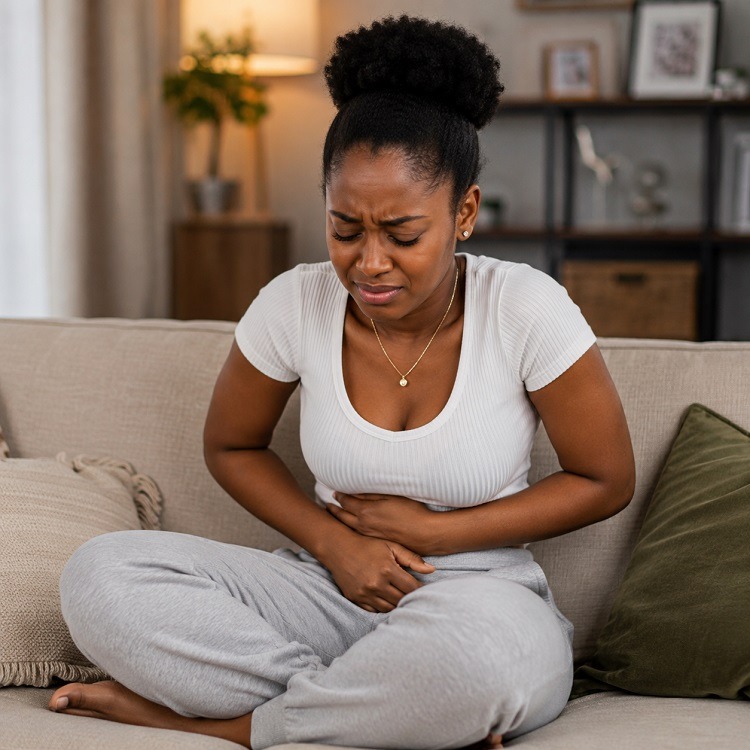
10 Natural Ways to Relieve Menstrual Cramps | Menstrual cramps can turn an otherwise normal day into a difficult one. For some women, the pain is mild and manageable, while for others, cramps can interfere with work, school, sleep, exercise, and everyday activities.
The medical term for painful periods is dysmenorrhea. Menstrual cramps commonly occur because the uterus contracts during menstruation. These contractions are influenced by natural chemicals called prostaglandins, which are involved in pain and inflammation. Higher prostaglandin activity is associated with more intense cramps.
Fortunately, several simple, non-drug approaches may help reduce menstrual discomfort. This article discusses 10 natural ways to relieve menstrual cramps, including heat, gentle exercise, massage, relaxation, sleep, hydration, dietary habits, ginger, and yoga.
Important: Natural remedies may help manage ordinary menstrual cramps, but severe or worsening period pain should not simply be endured. It may sometimes be a sign of an underlying medical condition.
What Causes Menstrual Cramps?
During menstruation, the uterus contracts to help shed its lining. Prostaglandins stimulate these contractions. When prostaglandin levels or activity are higher, contractions can become stronger and more painful.
There are two main types of dysmenorrhea.
Primary dysmenorrhea
Primary dysmenorrhea refers to menstrual pain that is not caused by another pelvic disease. It commonly begins around the time menstruation starts and often improves after the first few days of the period.
Secondary dysmenorrhea
Secondary dysmenorrhea is period pain caused by another condition affecting the reproductive organs. Examples include endometriosis, adenomyosis, uterine fibroids, ovarian cysts, and pelvic inflammatory disease. This type of pain may become worse over time, last longer, or occur outside the menstrual period.
Understanding the possible cause is important because natural home remedies should not replace medical treatment when an underlying condition is present.
10 Natural Ways to Relieve Menstrual Cramps
1. Apply Heat to Your Lower Abdomen
Using heat is one of the simplest ways to manage period cramps.
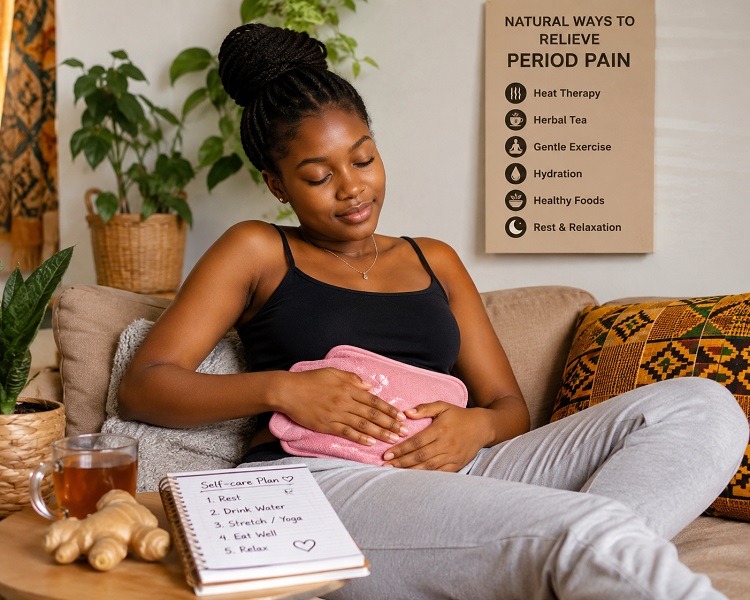
Place a heating pad, warm water bottle, or heat pack on your lower abdomen or lower back. A warm bath or shower can also provide soothing relief.
Heat may help relax muscles and reduce the sensation of pain. Health organizations such as the NHS and American College of Obstetricians and Gynecologists recommend heat as a self-care measure for menstrual pain.
How to use heat safely
- Place a warm—not excessively hot—heating pad over the painful area.
- Use a cloth barrier between your skin and a hot-water bottle.
- Avoid falling asleep with an electric heating pad switched on.
- Stop if your skin becomes excessively red, painful, or irritated.
Heat can be especially useful during the first day or two when cramps are often strongest.
2. Take a Warm Bath or Shower
A warm bath or shower can help your body relax while providing warmth to the abdomen and lower back.
For some women, combining warmth with quiet time and slow breathing can make cramps easier to tolerate.
The NHS specifically recommends warm baths and showers as one of the measures that may help ease period pain.
You can make this part of your normal menstrual self-care routine rather than waiting until your pain becomes severe.
3. Try Gentle Exercise
Exercise may be the last thing you want to do when your abdomen hurts, but gentle physical activity can help some women manage menstrual cramps.
Consider low-impact activities such as:
- Walking
- Gentle cycling
- Swimming
- Light stretching
- Easy aerobic exercise
- Yoga
Regular physical activity throughout the month may be more useful than exercising only after cramps begin. ACOG notes that aerobic activities such as walking, jogging, cycling, and swimming may help women feel better during painful periods.
You do not need an intense workout. If you are uncomfortable, start with a short walk or gentle stretching and stop if exercise makes the pain worse.
4. Massage Your Abdomen or Lower Back
Gentle massage may help reduce the discomfort associated with menstrual cramps.
Using your fingertips or the palm of your hand, gently massage the lower abdomen using slow circular movements. You can also massage the lower back if that is where you experience pain.
The NHS recommends massaging the tummy and back as one of the self-care measures that may help period pain.
Some people find massage even more relaxing when combined with warmth.
5. Practice Deep Breathing and Relaxation
Pain can cause muscle tension and stress, while stress can make it harder to cope with discomfort.
Relaxation techniques may help you manage the pain more comfortably. Try:
- Slow deep breathing
- Meditation
- Progressive muscle relaxation
- Mindfulness
- Quiet stretching
- Relaxing music
To practice simple deep breathing, breathe slowly through your nose, allow your abdomen to expand, and then slowly breathe out. Repeat for several minutes.
Relaxation techniques are included among complementary approaches that may help women cope with dysmenorrhea.
6. Get Enough Sleep and Rest
Poor sleep can make it more difficult to cope with pain and fatigue.
Try to maintain a regular sleep schedule before and during your period. If cramps are making you uncomfortable at night, you can combine rest with other strategies such as a warm shower, gentle stretching, or heat applied to the abdomen.
ACOG recommends getting enough sleep, particularly before and during menstruation, as part of self-care for painful periods.
Rest does not mean you have to remain in bed all day. Light movement during the day may be beneficial if you feel able to do it.
7. Stay Hydrated
Drinking enough fluids is an important part of general health during menstruation.
Water is a good choice, while warm caffeine-free drinks may also be comforting. Staying hydrated can help you maintain normal body functions and may be preferable to consuming large amounts of sugary or highly caffeinated drinks.
Hydration should not be viewed as a cure for menstrual cramps, however. It is best considered part of an overall healthy menstrual routine.
You can also obtain fluids through foods such as fruits, vegetables, soups, and other water-rich foods.
8. Eat a Balanced, Nutrient-Rich Diet
Your diet may not eliminate menstrual cramps, but maintaining a balanced diet supports overall health and provides the nutrients your body needs.
Build meals around:
- Vegetables and fruits
- Whole grains
- Beans and other legumes
- Fish, eggs, or other protein sources
- Nuts and seeds
- Healthy fats
It may also be helpful to limit excessive alcohol consumption and avoid relying heavily on highly processed foods.
Some research has investigated nutrients such as magnesium, vitamin B1, vitamin B6, vitamin E, and omega-3 fatty acids for menstrual pain. However, evidence is not strong enough to assume that supplements will work for everyone. ACOG notes that more research is needed before magnesium or vitamin B1 can be recommended as established treatments for period pain.
Therefore, it is better to focus on a varied diet rather than taking high-dose supplements without professional advice.
9. Consider Ginger
Ginger is one natural remedy that has received scientific attention for menstrual pain.
Some clinical trials have found that ginger may reduce pain associated with primary dysmenorrhea. For example, a randomized clinical trial involving young women found that ginger reduced menstrual pain, although more research is needed to establish the best dose, duration, and safety for different populations.
A 2026 systematic review and meta-analysis also found that plant-based treatments may reduce primary dysmenorrhea pain, but the researchers emphasized that the certainty of evidence was low to very low because of differences between studies and limitations in study quality.
This means ginger is promising, but it should not be presented as a guaranteed treatment.
If you use ginger, it can be incorporated into food or beverages. People taking medications or using concentrated herbal supplements should speak with a healthcare professional before using them regularly.
10. Try Gentle Yoga and Stretching
Yoga combines gentle physical movement, stretching, controlled breathing, and relaxation.
Certain comfortable yoga positions may help reduce muscle tension and encourage relaxation. You can try gentle movements such as:
- Child’s pose
- Cat-cow stretches
- Gentle seated forward stretches
- Knees-to-chest movements
- Supine pelvic movements
Do not force your body into a position or continue an exercise that increases your pain.
ACOG lists yoga and meditation among approaches that may help women cope with menstrual pain.
10 Natural Ways to Relieve Menstrual Cramps
What Is the Best Natural Remedy for Period Cramps?
There is no single natural remedy that works for everyone.
For many women, heat, gentle exercise, massage, adequate sleep, relaxation, and warm baths are practical first options. These approaches are also supported as self-care measures by reputable medical organizations.
Some women may also benefit from approaches such as ginger or yoga. However, the amount and quality of scientific evidence varies between different remedies.
You can experiment with safe approaches individually or combine several—for example, taking a warm bath followed by gentle stretching and relaxation.
When Should You See a Doctor About Menstrual Cramps?
Natural remedies are appropriate for managing mild, ordinary menstrual discomfort, but severe pain deserves attention.
Talk to a healthcare professional if:
- Your period pain is severe.
- Your cramps are getting progressively worse.
- Pain prevents you from attending work or school.
- Pain continues after your period ends.
- You experience pain between periods.
- You develop unusually heavy bleeding.
- You have fever or unusual vaginal discharge.
- Your pain begins suddenly or is much worse than usual.
- Home measures no longer provide adequate relief.
ACOG advises women to seek medical help when period pain is severe, worsening, or interfering with normal activities.
Severe menstrual pain can sometimes be associated with conditions such as endometriosis, adenomyosis, fibroids, ovarian cysts, or pelvic inflammatory disease.
If your period is late and you are sexually active and you develop sudden or severe pelvic pain, seek prompt medical attention because pregnancy-related conditions can sometimes cause serious pain.
Can Natural Remedies Replace Medical Treatment?
Not always.
Natural approaches can be useful for managing symptoms, particularly when cramps are mild. However, they should not be used to delay evaluation of severe, persistent, or unusual menstrual pain.
For example, if endometriosis is causing your cramps, treating the underlying condition may be necessary. Similarly, fibroids or adenomyosis may require specific medical management.
Your healthcare provider can assess your symptoms and, when appropriate, recommend tests such as an ultrasound to investigate possible causes.
Frequently Asked Questions
What is the fastest natural way to relieve menstrual cramps?
Applying gentle heat to the lower abdomen or lower back is one of the simplest natural approaches and may provide relatively quick comfort. A warm bath, gentle massage, or relaxation techniques can also help.
Does heat really help period cramps?
Yes. Heat is a commonly recommended self-care measure for menstrual pain. A heating pad, warm water bottle, warm bath, or shower may help reduce discomfort.
Does exercise reduce menstrual cramps?
Regular physical activity may help reduce menstrual discomfort for some women. Walking, swimming, cycling, gentle stretching, and yoga are examples of activities that may be easier to tolerate during a painful period.
What foods help with period pain?
There is no single food proven to eliminate menstrual cramps. A balanced diet containing vegetables, fruits, whole grains, legumes, protein sources, nuts, seeds, and healthy fats supports overall health. Certain nutrients have been studied for menstrual pain, but evidence for supplements remains limited.
Does ginger help menstrual cramps?
Research suggests ginger may reduce pain associated with primary dysmenorrhea, but the evidence is not strong enough to say it will work for everyone. More high-quality research is needed regarding dosage, duration, and safety.
Why are my menstrual cramps so painful?
Strong cramps can occur because of prostaglandin-related uterine contractions. However, severe or worsening pain can sometimes be caused by conditions such as endometriosis, adenomyosis, fibroids, or pelvic inflammatory disease.
When should I see a doctor about period pain?
See a healthcare professional if your pain is severe, worsening, unusual, occurs outside your period, or interferes with your normal activities. You should also seek medical attention if severe pain occurs with symptoms such as fever, unusual discharge, or unusually heavy bleeding.
Finally
Menstrual cramps are common, but that does not mean you have to suffer through them without support. Simple approaches such as applying heat, taking a warm bath, exercising gently, massaging the abdomen, getting adequate sleep, staying hydrated, practicing relaxation, eating a balanced diet, trying gentle yoga, and considering ginger may help some women manage period discomfort.
The key is to pay attention to your symptoms. Mild cramps that improve within a few days may respond well to self-care. However, severe, worsening, persistent, or disruptive menstrual pain deserves medical evaluation.
Natural remedies can be part of a healthy approach to menstrual pain, but they should complement—not replace—appropriate medical care when an underlying condition may be present.
Medical Disclaimer
This article is intended for general educational purposes and does not replace individualized medical advice, diagnosis, or treatment. If you have severe, persistent, or unusual menstrual pain, speak with a qualified healthcare professional.
Credible References
- American College of Obstetricians and Gynecologists (ACOG) – Dysmenorrhea: Painful Periods
ACOG: Dysmenorrhea: Painful Periods - NHS – Period Pain
NHS: Period Pain - Mayo Clinic – Menstrual Cramps: Symptoms and Causes
Mayo Clinic: Menstrual Cramps - MedlinePlus – Period Pain
MedlinePlus: Period Pain - PubMed – Effect of Ginger and Novafen on Menstrual Pain
PubMed: Ginger and Menstrual Pain Clinical Trial - PubMed – Efficacy of Plant-Derived Therapies for Primary Dysmenorrhea: Systematic Review and Meta-analysis
PubMed: Plant-Derived Therapies for Primary Dysmenorrhea
About the Author