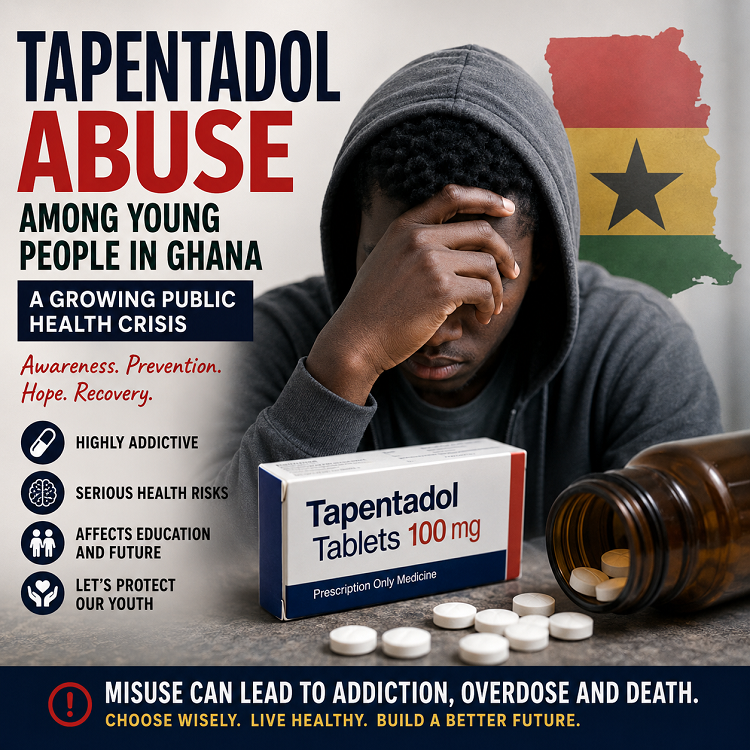
Tapentadol Abuse Among Young People in Ghana – A Growing Public Health Crisis Part 3
Prevention Strategies: Protecting Ghana’s Youth from Prescription Opioid Misuse
Tapentadol Abuse Among Young People in Ghana – A Growing Public Health Crisis Part 3 | In this last part of this piece, we shall explore effective prevention strategies, treatment options for tapentadol addiction and possible answers to frequently asked questions.
Preventing tapentadol abuse requires a coordinated effort involving families, schools, healthcare professionals, religious institutions, community leaders, the media, and government agencies. While treatment is essential for those already struggling with addiction, prevention remains the most effective and cost-efficient approach.
1. Strengthen Public Education
Many young people are unaware that prescription painkillers can be just as addictive as illicit drugs when misused. Nationwide awareness campaigns through television, radio, social media, and community outreach can help dispel myths and educate the public about the dangers of opioid misuse.
Health education should emphasize that “prescription” does not always mean “safe” when medicines are used without medical supervision.
2. Expand School-Based Drug Education
Schools should incorporate age-appropriate lessons on substance misuse into their health education curricula. These programmes should cover:
- The risks of opioid misuse
- Healthy ways to cope with stress
- Peer pressure resistance skills
- Mental health awareness
- Where to seek help
Interactive sessions involving healthcare professionals and individuals in recovery can make these programmes more impactful.
3. Improve Mental Health Services
Untreated depression, anxiety, trauma, and emotional distress can increase the risk of substance misuse. Expanding access to mental health care in schools, universities, and communities can help young people receive appropriate support before they turn to drugs.
Confidential counselling services should be readily available and free from stigma.
4. Promote Responsible Prescribing
Healthcare professionals play a critical role in preventing opioid misuse by:
- Carefully assessing patients before prescribing opioids.
- Prescribing the lowest effective dose for the shortest appropriate duration.
- Educating patients on proper medication use.
- Monitoring individuals who require long-term opioid therapy.
- Advising patients on the safe storage and disposal of unused medicines.
5. Strengthen Regulation and Enforcement
Regulatory authorities should continue to monitor the distribution of controlled medicines to reduce illegal sales and diversion. Measures may include:
- Regular inspections of pharmacies and licensed medicine outlets.
- Enforcement against unauthorized drug sellers.
- Improved tracking of controlled medicines.
- Public reporting mechanisms for suspected illegal drug sales.
At the same time, regulations should continue to ensure that patients with legitimate medical needs can still access appropriate pain relief.
6. Engage Religious and Community Leaders
Faith-based organizations, traditional leaders, and youth groups are trusted voices in many Ghanaian communities. They can:
- Organize educational seminars.
- Support families affected by addiction.
- Encourage young people to make healthy lifestyle choices.
- Reduce stigma surrounding addiction and mental health.
Community involvement strengthens prevention efforts and promotes early intervention.
7. Encourage Positive Youth Development
Young people who are actively engaged in meaningful activities are often less likely to misuse drugs. Opportunities such as sports, vocational training, entrepreneurship programmes, music, arts, and volunteer work can foster resilience, build confidence, and provide healthy alternatives to substance use.
Tapentadol Abuse Among Young People in Ghana – A Growing Public Health Crisis Part 3
Treatment for Tapentadol Addiction
Recovery from tapentadol addiction is possible, especially when treatment begins early. Addiction is a chronic medical condition, and effective treatment often combines medical care with psychological and social support.
Medical Assessment
Treatment usually starts with a comprehensive evaluation by a qualified healthcare professional. The assessment may include:
- Medical history
- Substance use history
- Mental health screening
- Physical examination
- Identification of other medical conditions
This helps determine the most appropriate treatment plan.
Medically Supervised Withdrawal (Detoxification)
Individuals who have developed physical dependence should not stop taking tapentadol abruptly without medical advice. Withdrawal symptoms can be uncomfortable and, in some cases, require medical supervision.
Healthcare providers may recommend gradual dose reduction or supervised withdrawal, depending on the individual’s condition.
Medication-Assisted Treatment (MAT)
For some people with opioid use disorder, medication-assisted treatment may be appropriate. Medicines such as buprenorphine, methadone, or naltrexone may be used in accordance with national treatment guidelines and clinical judgment. These medications help reduce cravings, manage withdrawal symptoms, and lower the risk of relapse.
Treatment should always be supervised by qualified healthcare professionals.
Counselling and Behavioural Therapy
Psychological therapies are an essential part of recovery.
Common approaches include:
- Cognitive Behavioural Therapy (CBT): Helps individuals identify unhealthy thought patterns and develop healthier coping strategies.
- Motivational Interviewing (MI): Encourages personal motivation for change.
- Relapse Prevention Therapy: Helps identify triggers and develop strategies to avoid returning to drug use.
Family Therapy
Addiction affects the entire family. Family counselling can improve communication, rebuild trust, and help relatives provide effective support during recovery.
Rehabilitation Programmes
Some individuals benefit from structured rehabilitation programmes, either as inpatients or outpatients. These programmes typically combine:
- Medical care
- Psychological support
- Group therapy
- Life skills training
- Vocational support
- Relapse prevention planning
Long-Term Recovery
Recovery does not end after rehabilitation. Long-term success often depends on:
- Regular follow-up appointments
- Peer support groups
- Healthy lifestyle habits
- Stable employment or education
- Strong family support
- Ongoing mental health care where needed
Relapse can occur, but it should be viewed as a signal to adjust treatment rather than as a failure.
Tapentadol Abuse Among Young People in Ghana – A Growing Public Health Crisis Part 3
Frequently Asked Questions (FAQs)
1. Is tapentadol addictive?
Yes. Tapentadol is an opioid medication and can lead to physical dependence and addiction if it is misused or taken for prolonged periods without appropriate medical supervision.
2. Can tapentadol cause an overdose?
Yes. Taking excessive amounts of tapentadol or combining it with alcohol or other sedative drugs can slow breathing to dangerous levels and may result in an overdose, which is a medical emergency.
3. Why are some young people abusing tapentadol?
Several factors may contribute, including peer pressure, untreated mental health conditions, curiosity, academic stress, unemployment, misinformation, and inappropriate access to prescription medicines.
4. Can someone recover from tapentadol addiction?
Absolutely. With early diagnosis, appropriate medical treatment, counselling, family support, and long-term follow-up, many people successfully recover from opioid addiction.
5. What should parents do if they suspect opioid misuse?
Parents should approach the young person with empathy, avoid judgment, seek advice from qualified healthcare professionals, and encourage early assessment and treatment if needed.
6. Is tapentadol legal in Ghana?
Yes. Tapentadol may be legally available for appropriate medical use under prescription and in accordance with Ghana’s medicines regulations. It should only be used as directed by a qualified healthcare professional.
7. How can overdose be recognized?
Warning signs include:
- Difficulty breathing
- Extreme sleepiness
- Blue lips or fingertips
- Pinpoint pupils
- Inability to wake the person
- Loss of consciousness
Anyone suspected of experiencing an opioid overdose requires immediate emergency medical care.
8. Where can people seek help in Ghana?
Individuals who are concerned about opioid misuse should seek assistance from:
- Hospitals and health centres
- Qualified physicians
- Mental health professionals
- Addiction specialists
- Psychiatric hospitals
- Licensed counselling services
Early intervention improves the chances of successful recovery.
The way forward
Tapentadol is a valuable medicine for the treatment of moderate to severe pain when prescribed and used appropriately. However, like other opioid medications, it carries a significant risk of misuse, dependence, and addiction when taken outside medical guidance.
Although comprehensive Ghana-specific data on tapentadol abuse remain limited, the broader challenge of prescription drug misuse highlights the need for vigilance. Young people face numerous pressures—from academic demands and unemployment to mental health challenges and peer influence—that can increase their vulnerability to substance misuse. Addressing these underlying issues is just as important as controlling access to potentially addictive medications.
Preventing tapentadol abuse requires collaboration among healthcare professionals, families, schools, community organizations, faith leaders, regulatory authorities, and young people themselves. Education, responsible prescribing, early recognition of warning signs, improved access to mental health services, and compassionate treatment for those affected can all contribute to reducing the burden of opioid misuse.
By working together, Ghana can protect its youth, support individuals living with addiction, and ensure that medicines like tapentadol continue to be used safely for those who genuinely need them.
Key Takeaways
- Tapentadol is a prescription opioid used to treat moderate to severe pain.
- Misuse can lead to dependence, addiction, overdose, and serious health complications.
- Young people may be at increased risk because of peer pressure, mental health challenges, unemployment, academic stress, and misinformation.
- Early recognition of warning signs allows timely intervention.
- Families, schools, healthcare providers, and communities all have important roles in prevention.
- Recovery is possible through evidence-based medical treatment, counselling, family support, and long-term follow-up.
References
American Psychiatric Association. (2022). Diagnostic and Statistical Manual of Mental Disorders (5th ed., text rev.; DSM-5-TR). American Psychiatric Publishing.
Centers for Disease Control and Prevention. (2024). Preventing opioid use disorder and overdose. https://www.cdc.gov/overdose-prevention/
International Narcotics Control Board. (2024). Annual Report. https://www.incb.org
United Nations Office on Drugs and Crime. (2024). World Drug Report 2024. https://www.unodc.org
World Health Organization. (2023). Opioid overdose. https://www.who.int/news-room/fact-sheets/detail/opioid-overdose
Food and Drugs Authority Ghana. Guidelines and information on the regulation of medicines. https://fdaghana.gov.gh
Pharmacy Council Ghana. Standards for pharmacy practice and medicines regulation. https://pharmacycouncilghana.org
Medical Disclaimer
This article is intended for educational and public health awareness purposes only. It should not be considered a substitute for professional medical advice, diagnosis, or treatment. Never start, stop, or change any medication, including tapentadol, without consulting a qualified healthcare professional. If you suspect an opioid overdose or substance use disorder, seek immediate medical attention or contact the nearest healthcare facility.
About the Author

Gatorwu
Administrator
Mr. Sylvanus Gatorwu is a public health educator with over 15 years of experience in community health promotion, kidney disease awareness, health education, and preventive healthcare. His work includes community outreach, public health campaigns, patient education, and collaboration with healthcare professionals to improve health literacy. He has worked closely with organizations like PEPFAR where he spearheaded the training of journalists in the Eastern Region of Ghana on how to write quality health articles. He also managed the Matthew Chapter 25 House (An HIV and AIDS Resource Centre), where he coordinated activities of people living with HIV.